Car loans in the Philippines
One number decides most car loans: the monthly payment. Here are the banks' published rates by term, the fees that ride along, who qualifies — and a calculator that turns any quoted rate into what the car really costs you a month.
The short answer
A brand-new car loan in the Philippines costs 5.19% to 32.52% in add-on interest depending on the bank and the term, with down payments from 15% and monthly incomes from ₱30,000. The cheapest monthly payment on a ₱1,000,000 loan over 5 years is UnionBank’s at about ₱20,967 — but the right answer depends on your term, and the tables and calculator below turn any quoted rate into your real number.
Lowest monthly (₱1M, 60 mo)
₱20,967 — UnionBank
Lowest down payment
15% — BPI
Fastest decision
1 day — five banks
Rates are the banks’ advertised standard rates for brand-new cars, last checked November 4, 2026. Promos come and go — BDO’s Deals on Wheels (waived fees, discounted rates) runs October 15 to November 30, 2026 — so treat every number here as a starting quote, not a promise.
Car loan interest rates by term
Most Philippine banks quote an add-on rate: interest charged once on the full loan for the whole term, which is why the rate climbs as the months stretch. BDO is the exception — it quotes a yearly effective rate charged on the balance you still owe, so its smaller-looking numbers are not comparable to the add-on column without a conversion (the calculator below does that conversion for you).
| Bank | 12 mo | 18 mo | 24 mo | 36 mo | 48 mo | 60 mo |
|---|---|---|---|---|---|---|
| Metrobank | 5.19% | 7.61% | 10.74% | 16.90% | 23.55% | 30.26% |
| RCBC | 5.35% | 7.70% | 10.47% | 16.98% | 22.88% | 29.60% |
| BPI | 5.43% | 7.73% | 11.30% | 17.76% | 24.13% | 31.01% |
| Maybank | 5.43% | 7.73% | 10.19% | 15.21% | 20.66% | 27.30% |
| UnionBank | 6.00% | 8.35% | 10.74% | 15.63% | 20.65% | 25.80% |
| EastWest | 6.84% | 9.60% | 12.41% | 18.18% | 24.12% | 30.24% |
| Security Bank | 5.61% | 8.44% | 12.14% | 18.18% | 24.72% | 32.52% |
| BDO (effective, per year) | 7.50% | 8.00% | 9.25% | 10.00% | 10.25% | 10.50% |
| Bank | 12 mo | 18 mo | 24 mo | 36 mo | 48 mo | 60 mo |
|---|---|---|---|---|---|---|
| BPI | 7.89% | 11.87% | 16.08% | 24.80% | 34.20% | 44.32% |
| RCBC | 8.26% | 12.14% | 16.39% | 24.72% | 33.70% | — |
| Security Bank | 9.14% | 13.50% | 18.69% | 28.29% | 38.64% | — |
| EastWest | 8.82% | 12.99% | 17.53% | 26.94% | 37.40% | — |
| BDO (effective, per year) | — | — | 12.00% | 13.00% | 13.00% | — |
Used-car loans cost more everywhere: BPI’s own table runs from 7.89% add-on at 12 months to 44.32% at 60, financing up to 70% of the car’s price against 85% for a brand-new one. Security Bank stops at 48 months for second-hand units. These are the standard tables — banks run promo rates under them (Metrobank’s one-month-advance variants, BDO’s current promo), and your assessed rate can differ from any of them.
Advertisement
Work out your real monthly payment
Set the car, the down payment and the term, then tap a bank chip — or type the add-on rate from your own dealer or bank quote. The results show the payment, the interest the add-on basis builds in, the equivalent effective rate per year (our calculation from the payment stream), and what the same loan costs at every other term at that bank.
Metrobank · 60 months
₱17,368/mo
- Down payment
- ₱200,000
- Loan amount
- ₱800,000
- Interest (add-on 30.26%)
- ₱242,080
- ≈ Effective rate / yr (our calc)
- 11.50%
- Total of payments (loan + interest)
- ₱1,042,080
| Term | Add-on rate | Monthly |
|---|---|---|
| 12 mo | 5.19% | ₱70,127 |
| 18 mo | 7.61% | ₱47,827 |
| 24 mo | 10.74% | ₱36,913 |
| 36 mo | 16.90% | ₱25,978 |
| 48 mo | 23.55% | ₱20,592 |
| 60 mo | 30.26% | ₱17,368 |
Add-on rate: charged once on the full loan for the whole term — that is why it climbs with the months. BDO quotes a yearly effective rate on the declining balance instead (7.50%–10.50% for brand-new as of Nov 2026): type its equivalent add-on into the override to compare. Advertised standard rates, last checked Nov 4, 2026 — your rate depends on the bank's assessment and current promos. Confirm everything on the disclosure statement before you sign.
What a car loan really costs
The monthly payment is not the whole cost. Between approval and release, the loan picks up one-time charges, and the bank requires the car to be comprehensively insured while it is mortgaged. BSP rules obligate your bank to hand you a disclosure statement listing every charge before you sign — ask for it and read it against this list.
| Charge | Published amount | Who charges it |
|---|---|---|
| Documentary stamp tax | ₱1.50 for every ₱200 of the loan | BDO, Metrobank |
| Chattel mortgage annotation at the LTO | ₱380 (BDO); ₱500 (BPI) | BDO, BPI |
| Notarial fee | ₱500 a document (BDO); ₱300–₱400 (Metrobank) | BDO, Metrobank |
| Processing fee | Depends on where you live; quoted on approval | BDO, BPI |
| Comprehensive insurance | From an insurer the bank accredits; EastWest also asks for Acts-of-God cover | All banks, while the loan runs |
Do you qualify?
Banks publish their minimums, then assess the whole file. Meeting the numbers below gets you in the door — it is not an approval, and every bank checks your credit record.
- Age. At least 18 (21 at some banks), and no older than 65 to 70 when the loan matures — BPI’s ceiling is 70 at loan maturity.
- Income. Household or family minimums from ₱30,000 a month (BPI) and ₱40,000 gross (Metrobank) up to ₱50,000 at some banks. Dealers’ in-house arms set their own.
- Work history. Employed, self-employed and OFW borrowers each prove income differently — the document lists are below. Expect banks to prefer two years of tenure or business operation.
- Credit record. Every bank checks it. A clean record moves your assessed rate; a bad one can sink an application that meets every minimum.
Documents you will need
A valid ID and proof of income are the spine of every application. What counts as proof of income depends on how you earn:
Employed
- Certificate of employment with salary
- Payslips, usually the last 3 months
- Latest ITR or BIR Form 2316
- Valid government ID (two at most banks)
Own business
- Business registration: DTI, SEC or mayor's permit
- Latest ITR with financial statements
- Audited financial statements, 2–3 years
- Bank statements, 3–6 months
OFW / seafarer
- Proof of remittance, 3–6 months
- Employment or crew contract (POEA for seafarers)
- Payslips for the last 3 months
- Passport
Counts across the eight banks compared here: the certificate of employment is the single most-asked document (11 banks), followed by two valid IDs (10) and the ITR or BIR Form 2316 (9).
How to apply, step by step
Most banks decide within one to three business days once your documents are complete, and release the loan after you sign.
- Settle the car and get the dealer's quotation. Choose the car first. The dealer's quotation is what the loan amount is written against — Security Bank lists it among its requirements.
- Apply online or at a branch. BDO and Metrobank take applications online; every bank takes them at a branch. Toyota Financial Services takes them at Toyota dealers.
- Submit your ID and income documents. Valid government IDs plus proof of income. What counts as proof depends on whether you are employed, self-employed or an OFW — the lists are in the requirements section above.
- Get the decision. As fast as one business day at BDO, RCBC, Security Bank, EastWest and Maybank once your documents are complete; about three business days at Metrobank.
- Read the disclosure statement before you sign. BSP rules require the bank to give you a disclosure statement showing the full cost of the loan — every fee in the costs section above should appear there.
- Register the chattel mortgage. BDO and PNB ask you to register on the Personal Property Security Registry before the loan is released; the annotation also goes on the car's CR at the LTO.
Bank loan or dealer in-house financing?
The showroom will happily arrange the money too — from the carmaker’s own finance company or a bank it partners with. Neither is automatically cheaper; they differ in rate basis, down payment and structure:
| Point | Bank auto loan | Dealer in-house |
|---|---|---|
| Who lends | BDO, BPI, Metrobank, RCBC, UnionBank and the rest | Carmaker finance: Toyota Financial Services, Mitsubishi Motors Finance (books with Security Bank); Hyundai routes through EastWest, BDO and BPI |
| Down payment | From 15% (BPI); 20% is the norm | From 10% at Toyota Financial Services |
| Rate basis | The bank's published table per term | The dealer's quotation for your car |
| Decision | As fast as 1 day at five banks | As fast as 24 hours at Toyota |
| Structure | Equal monthly payments to zero | Toyota's Balloon Payment Plus: lower monthlies, then a lump sum (45% of the price on 60 months for the Rush) you pay or settle by trading in |
| Where to apply | Online or at a branch; BPI also takes applications at accredited dealers | At the showroom, when you buy |
Five loan terms to check before you sign
Five clauses decide what happens after you sign. Ask your bank for each one in writing — these are the published examples:
- Release of mortgage after full payment. Getting the bank’s name off your CR costs ₱500 at BDO and ₱800 at BPI.
- Late payment charge. Metrobank charges 5% a month on late installments.
- Paying off early. Metrobank’s pre-payment processing fee is ₱7,500 — worth knowing before a bonus burns a hole in your pocket.
- Promo lock-ins. BPI promo loans bar early payment or pre-termination for the first 3 years.
- Rate changes. UnionBank’s terms allow the outstanding balance to be repriced if the bank’s cost of money changes or Manila CPI rises 15% or more.
Advertisement
What Pag-IBIG, SSS and GSIS actually offer
The most-searched car-loan questions in the Philippines are about agencies that do not make car loans at all. Here is what each actually has:
| Agency | Car loan? | What exists instead |
|---|---|---|
| Pag-IBIG | No | Multi-Purpose Loan: up to 90% of your savings, 12–36 months (covers car repair, not purchase). Home Equity Appreciation Loan can fund a car, but only for housing borrowers of 5+ years in good standing — the house is the collateral. |
| SSS | No | Salary Loan: one to two months' salary credit depending on contributions, 8% a year over 24 months with a 1% service fee — spendable on anything. |
| GSIS | No | Finances bicycles, e-bikes and e-mobility up to ₱300,000 (Ginhawa loan, 36 months); MPL Flex is general-purpose cash of 1–14× basic salary. |
| Home Credit | No | Finances motorcycles, not cars; its cash loan runs ₱3,000–₱150,000. |
| Robinsons Bank | Merged | Merged into BPI on January 1, 2024 — new car loans are BPI Auto Loans; existing loans continue under BPI. |
| CTBC Bank | No | Lends for homes, salaries and businesses — no auto product. |
Car loan questions
What is the normal interest rate for a car loan in the Philippines?
For a brand-new car, the banks' advertised add-on rates run from about 5.19% (Metrobank, 12 months) to about 32.52% (Security Bank, 60 months) for the whole term — the rate climbs with the term because an add-on rate is charged once on the full loan. BDO quotes a different basis: a yearly effective rate on the declining balance, 7.50% to 10.50% for brand-new cars. Promos can sit under the standard tables; the rates here were last checked on November 4, 2026, so verify with the bank before you rely on one.
Which bank has the lowest car loan rate in the Philippines?
It depends on the term, which is why comparing the monthly payment beats comparing headline rates. On a ₱1,000,000 loan over 60 months, UnionBank's published add-on rate works out to the lowest monthly payment (about ₱20,967), with Maybank close behind; at 12 months, Metrobank's 5.19% add-on is the lowest published rate. And BDO's 10.50% effective rate for 60 months looks higher than the add-on numbers but is charged only on what you still owe — the calculator on this page puts every quote on one scale.
How is the monthly amortization of a car loan computed?
For an add-on rate: loan × (1 + add-on rate) ÷ months. A ₱1,000,000 loan at a 25.80% add-on rate over 60 months is ₱1,258,000 ÷ 60 ≈ ₱20,967 a month. For a yearly effective rate on a declining balance (BDO's basis), interest each month is charged on what you still owe, so the payment comes from the standard annuity formula. The calculator on this page computes the add-on payment and derives the equivalent effective rate from the payment stream.
How much is the down payment for a car loan?
Fifteen percent is the lowest down payment open to every buyer (BPI, which finances up to 85% of a brand-new car's price); twenty percent is the norm at the other banks. Second-hand cars need at least 30% down at most banks, with BPI financing up to 70% of a used car's price. Landbank advertises 5% down, but only for its own depositors.
What is the minimum income for a car loan in the Philippines?
Banks publish household or family income minimums from ₱30,000 a month (BPI) to ₱40,000 gross family income (Metrobank), and up to ₱50,000 at some banks. Meeting the minimum qualifies you to apply — it is not an approval. Every bank also checks your credit record, and self-employed and OFW applicants prove income with different documents than employees.
How long does car loan approval take?
Once your documents are complete: as fast as one day at RCBC, Security Bank, EastWest, Maybank and BDO, and about three business days at Metrobank. The loan is released after you sign; BDO and PNB ask for the chattel mortgage to be registered before release, which can add a few days.
Can I get a car loan for a second-hand car?
Yes — several banks lend on used cars, among them BPI, RCBC, Security Bank, EastWest and BDO. Expect a higher add-on rate than brand-new (BPI publishes 7.89% at 12 months rising to 44.32% at 60), a down payment of at least 30% at most banks, and shorter maximum terms at some banks — Security Bank, for example, stops at 48 months for second-hand units.
Does Pag-IBIG offer a car loan?
No. Pag-IBIG's Multi-Purpose Loan is a cash loan of up to 90% of your Pag-IBIG savings over 12 to 36 months that lists car repair — not car purchase — among its uses, and its Home Equity Appreciation Loan can fund a car only for housing-loan borrowers of at least five years in good standing, with the house as collateral. SSS and GSIS likewise have no car loan; their salary loans are general-purpose cash. To finance the car itself, the lenders are the banks and carmaker finance companies compared on this page.
Road-ready gear
SponsoredHand-picked for the drive — check today's prices on Shopee.
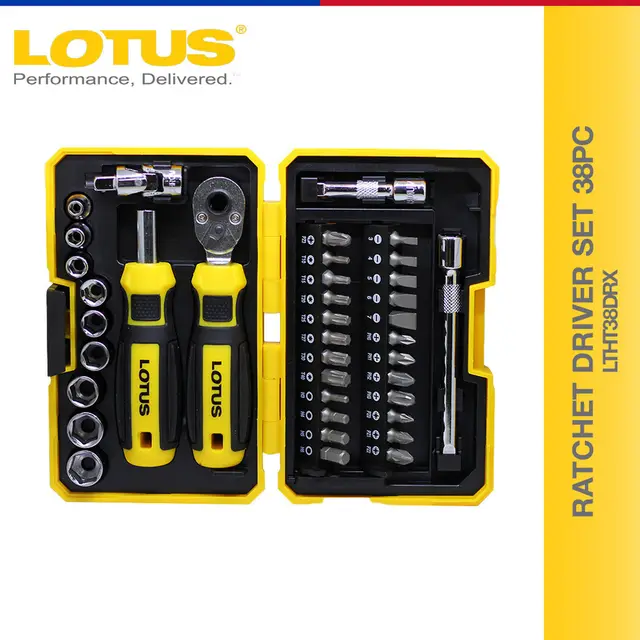 ToolsLotus 38-piece ratchet driver setCheck price on Shopee
 InteriorMemory-foam lumbar supportCheck price on Shopee
 InteriorLong-lasting car perfumeCheck price on Shopee
Sponsored · we may earn a commission · Shopee
Advertisement
Sources and disclaimer
A guide, not a loan offer. This page is not affiliated with any bank or finance company. Rates, fees and rules are the lenders’ own published figures — advertised standard rates, last checked November 4, 2026 — and your assessed rate, fees and approval depend on the lender. The monthly payments and effective-rate figures computed here are our calculations from those published rates; the disclosure statement your bank hands you before signing is the figure that counts.
- Primary comparison: Expressway.ph — Car loans in the Philippines 2026 (published Sep 28, 2026) — the cross-bank rate matrix, fee schedules, requirement lists and agency answers this guide builds on.
- Bank pages: BPI Auto Loan (published add-on and effective rates, 85%/70% financing, ₱30,000 income rule), BDO Auto Loan — Deals on Wheels (promo window Oct 15–Nov 30, 2026; effective-rate basis), Metrobank Car Loan (₱40,000 income rule, minimum age 18).
- Third-party corroboration: AutoDeal’s 2026 auto-loan rate round-up and BYD Cars Philippines’s 2025 comparison — used to sanity-check ranges, never as the source of a number.
Found the car? Now solve the parking.
ParkinganPH maps verified parking lots across the Philippines with real rates, hours and directions — so the car you just financed always has somewhere to sleep.