LTO Exam Reviewer 2026
Seventy-five source-cited practice questions for the Philippine LTO written exam — road signs, traffic rules, penalties, defensive driving and licensing — with a timed 40- or 60-question mock and the full answer key. Free, no login, and every answer names the law or manual behind it.
2026 practice test
Sit the paper before you sit the paper
Every session comes from the same 75-question bank as the answer key below. Missed questions come back first, and your progress stays in this browser.
Drill one topic
Saved on this device only — no account, no upload. Clearing site data resets it.
Advertisement
Study mode
The full answer bank
75 of 75
Road signs & markings30 questions
01Road signsYou reach a red octagonal STOP sign where the road is empty. What must you do?
- AStop only when a pedestrian is on the crossing
- BSlow down and roll through if nothing is coming
- CYield only to traffic approaching from the right
- DStop completely at the marked line, then go when it is safe
A STOP sign demands a full stop at the line — both wheels stationary — even when the road looks clear. You then proceed only when it is safe. A rolling stop is a violation.
Source · Philippine Road Signs and Pavement Markings Manual R1-1; RA 4136, Land Transportation and Traffic Code, Sec. 35
02Road signsA downward-pointing red-bordered triangle reads GIVE WAY. What does it require?
- ATake priority over traffic joining from the left
- BWatch for a sharp bend immediately ahead
- CGive way to traffic on the main road, stopping only if necessary
- DStop and wait for a green signal before moving
YIELD means slow down and let traffic on the main road pass. A complete stop is required only when traffic or a pedestrian makes it necessary — unlike a STOP sign.
Source · Philippine Road Signs and Pavement Markings Manual R1-2
03Road signsA white circle with a red border shows a U-shaped arrow crossed by a red slash. What is prohibited?
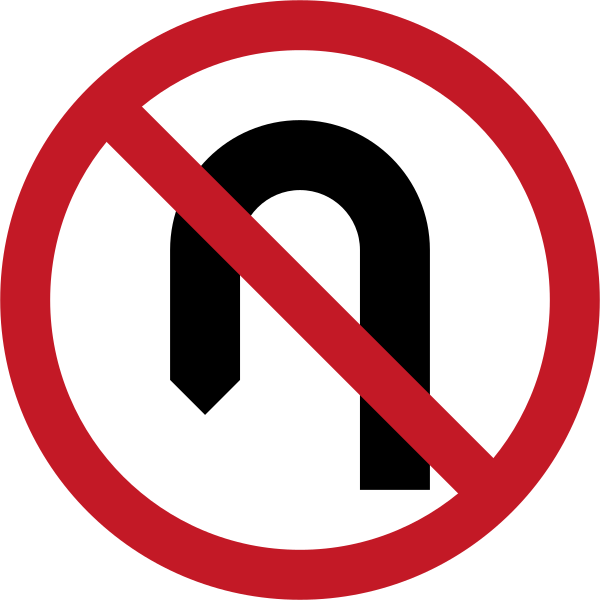
- AEvery U-turn at this location
- BAny left turn at the next junction
- CStopping inside the U-turn slot
- DU-turns, but only on weekdays
The slash cancels the manoeuvre shown. This is a regulatory no-U-turn sign, so turning around here is a traffic violation at any time.
Source · Philippine Road Signs and Pavement Markings Manual R3-15
04Road signsA fluorescent yellow-green sign shows a walking figure over striped lines. What is it warning you about?
- ARoadworks and a lane closure ahead
- BA public market with street parking
- CA pedestrian crossing — slow down and prepare to stop
- DA footbridge with no road access
The crossing symbol warns of pedestrians on the road. Reduce speed and be ready to yield to anyone on the markings, including someone stepping out between parked cars.
Source · Philippine Road Signs and Pavement Markings Manual W6-1
05Road signsA red-bordered triangle shows a car above two wavy skid marks. What should you expect?
- AA surface that may become slippery, especially in rain
- BA service station with a wet bay
- CA sharp bend with a low guardrail
- DA mandatory tyre-check checkpoint
This warns that the road loses grip when wet. Reduce speed, avoid sudden braking and increase your following distance.
Source · Philippine Road Signs and Pavement Markings Manual W5-9
06Road signsA white circle with a red border shows the number 60. What does it mean?
- AThe next town is 60 kilometres away
- BThis is highway route number 60
- CThe maximum permitted speed is 60 km/h
- DThe minimum permitted speed is 60 km/h
A red-bordered white circle is a regulatory speed limit — the maximum, not a target. Minimum-speed signs use a blue circle with no red border.
Source · Philippine Road Signs and Pavement Markings Manual R4-1
07Road signsA white rectangular sign carries a blue arrow and the words ONE WAY. What does it tell you?
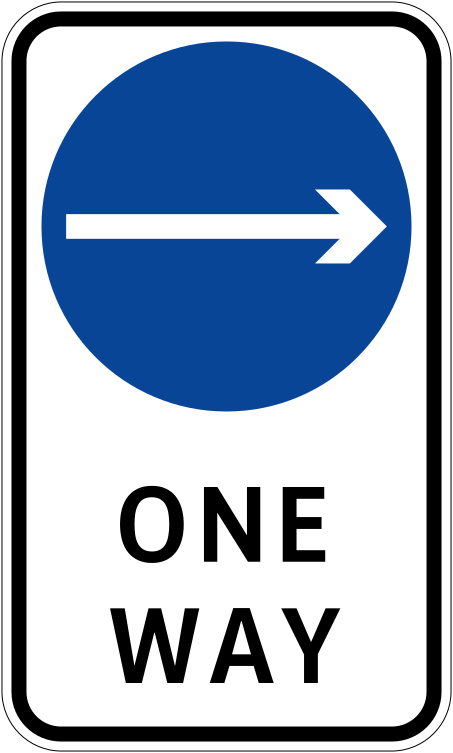
- ATraffic on this road flows only the way the arrow points
- BA detour begins at the next corner
- CYou must turn at the junction ahead
- DEntry is prohibited from every direction
The arrow gives the only direction of travel for that road. Driving against it is a violation, even if the lane looks empty.
Source · Philippine Road Signs and Pavement Markings Manual R2-2P
08Road signsWhat does a solid red circle with a horizontal white bar mean?
- AThe road is closed for repairs
- BYield to oncoming traffic before proceeding
- CNo entry — no vehicle may enter this road
- DStop, then continue when clear
This is the No Entry sign. It is commonly placed at the exit end of a one-way street, where entering would mean driving against traffic.
Source · Philippine Road Signs and Pavement Markings Manual R3-1
09Road signsA red-bordered triangle shows three curved arrows chasing each other in a circle. What is ahead?
- AA roundabout or rotunda
- BA pedestrian-only plaza
- CA vehicle inspection checkpoint
- DA U-turn slot with a tight radius
The circular arrows warn of a roundabout. Slow down and prepare to yield to vehicles already inside it.
Source · Philippine Road Signs and Pavement Markings Manual W2-7
10Road signsA white circle with a red border shows two cars side by side under a red slash. What is prohibited?
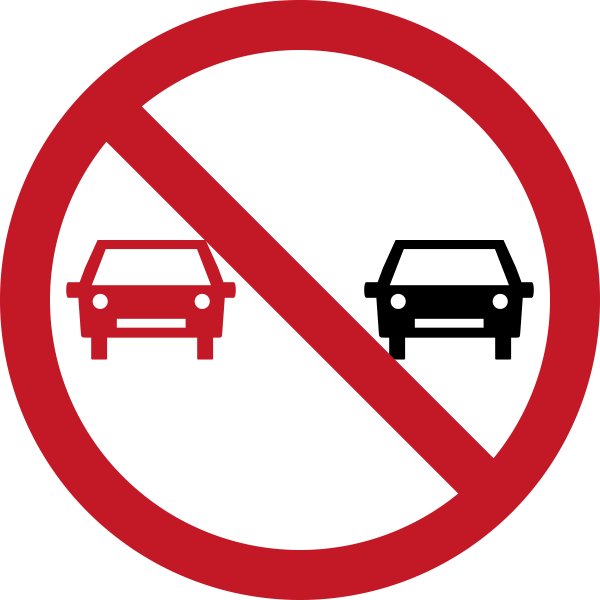
- AUsing the outer lane with a heavy load
- BParking two cars side by side
- COvertaking another vehicle in this section
- DTwo-way traffic on this road
The no-overtaking sign is used where sight distance is short — curves, crests and narrow sections. Pass only where a broken line or a sign permits it.
Source · Philippine Road Signs and Pavement Markings Manual R3-16
11Road signsA red-bordered triangle shows an arrow bending to the right. What does it warn of?
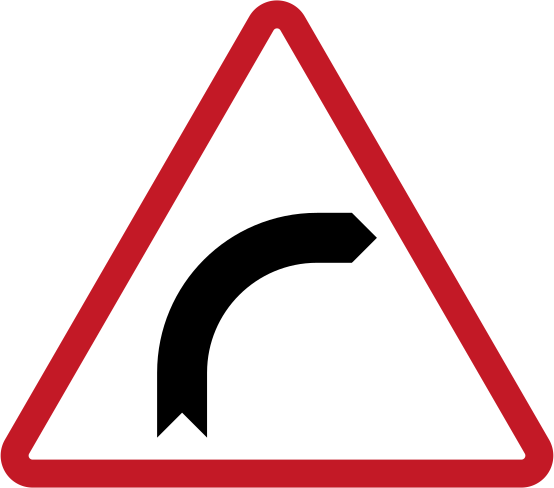
- AA right-hand curve ahead — reduce speed before entering it
- BAn expressway exit ramp
- CA right lane reserved for slow vehicles
- DA compulsory right turn at the junction
This is a warning, not a command. Brake before the curve, not while you are already turning, and stay inside your lane.
Source · Philippine Road Signs and Pavement Markings Manual W1-3
12Road signsA yellow pentagon shows two children on a crossing. What is the correct response?
- AThe road is for pedestrians only
- BA public playground is immediately ahead
- CSchool zone — reduce speed and watch for children crossing
- DA children's hospital is nearby
Children can step out between parked cars. The limit falls to 20 km/h while children are present, and you should be ready to stop.
Source · Philippine Road Signs and Pavement Markings Manual W6-2; RA 4136, Land Transportation and Traffic Code, Sec. 35
13Road signsA solid white line divides two lanes moving in the same direction. What does it mean?
- ALane changes are discouraged but not prohibited
- BYou may change lanes freely at any point
- CCrossing it is allowed only while overtaking
- DAll traffic must drive single file
A solid white line marks the edge of a lane and discourages weaving. A broken white line means a lane change is permitted when safe.
Source · Philippine Road Signs and Pavement Markings Manual, Sec. 4
14Road signsWhat does a solid yellow line on a two-way road mean?
- AThe lane is reserved for yellow-plated vehicles
- BOnly buses may use the opposite lane
- COvertaking is allowed if the road is clear
- DDo not cross the line — overtaking is prohibited
A solid yellow line separates opposing traffic and forbids crossing it to pass. A broken yellow line allows overtaking when it is safe.
Source · Philippine Road Signs and Pavement Markings Manual, Sec. 4.2
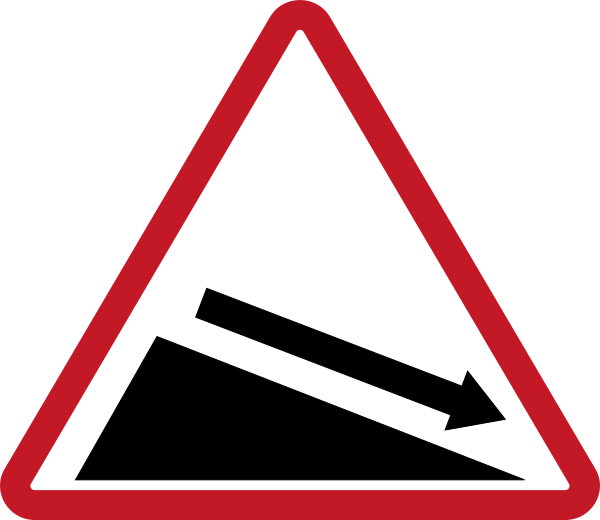
15Road signsA red-bordered triangle shows a truck on a downward slope. What should a driver do?
- ALook for a truck stop in the next kilometre
- BReduce speed and select a lower gear before the descent
- CPull over and wait for a convoy escort
- DTreat the road as a truck-only route
A steep downgrade punishes brake fade. Slow down before the slope and use engine braking; heavy vehicles should be in a low gear from the start.
Source · Philippine Road Signs and Pavement Markings Manual W5-4
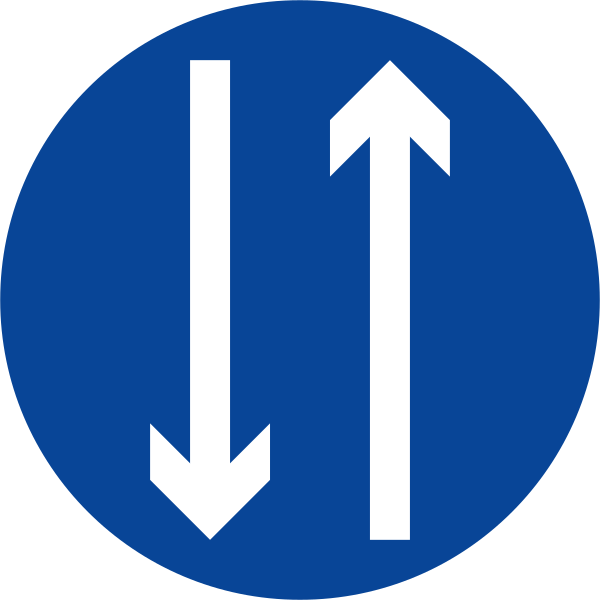
16Road signsA blue circle shows two white arrows pointing in opposite vertical directions. What is ahead?
- AA reversible lane that changes with the rush hour
- BA steep climb followed by a descent
- CA heavy-traffic bottleneck
- DTwo-way traffic — watch for oncoming vehicles
The road changes from one-way to two-way, or a divided road becomes undivided. Keep right and expect oncoming traffic in what looked like your lane.
Source · Philippine Road Signs and Pavement Markings Manual R2-7
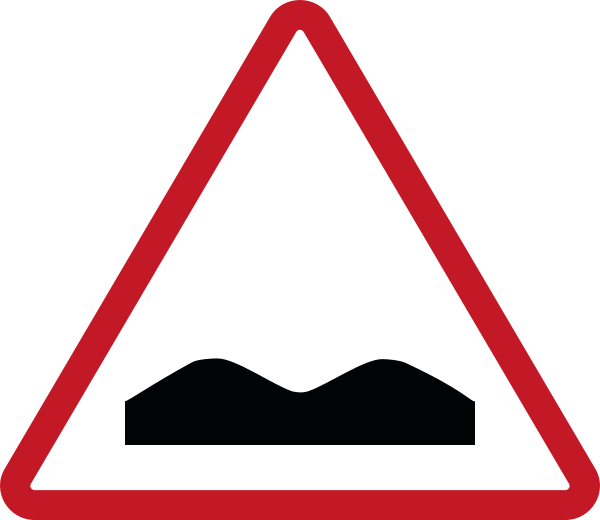
17Road signsA red-bordered triangle shows a raised hump in the road. What does it warn of?
- AA lane shift to the left
- BFresh asphalt with no lane markings
- CBumps, dips or an uneven surface — slow down
- DA slippery surface caused by oil
The wavy line warns of a rough surface. Speed makes a dip or bump worse and can damage suspension or throw the car offline.
Source · Philippine Road Signs and Pavement Markings Manual W5-2
18Road signsA red-and-white crossbuck is lettered RAILROAD CROSSING. What is it warning you about?
- AA railroad crossing — be ready to stop
- BA railway vehicle has the right of way only at night
- CA roundabout with a raised centre island
- DA road restricted to residents
This is the railroad crossing warning. Slow down, look both ways and stop if a train is approaching — a train cannot stop for you.
Source · Philippine Road Signs and Pavement Markings Manual W7-4
19Road signsA blue circle with a white P and one red diagonal slash is posted at the kerb. What does it mean?
- AThe previous parking restriction has ended
- BCaution: a parking attendant is on duty
- CNo parking — but a brief stop to load or unload may be allowed
- DNo entry for private vehicles
One slash over a P prohibits parking. The no-stopping variant uses two crossed slashes, which also forbids waiting.
Source · Philippine Road Signs and Pavement Markings Manual R5-1S
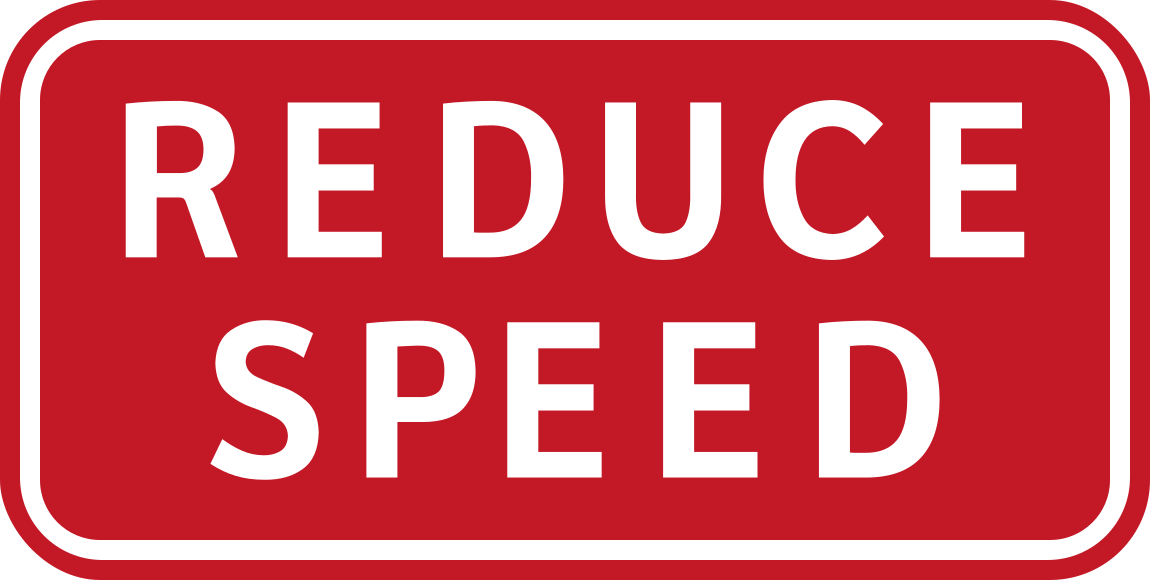
20Road signsA red rectangular sign reads REDUCE SPEED. What is it instructing you to do?
- AStop completely before the next junction
- BReduce speed for a hazard or a slower zone ahead
- CMove into the slow lane
- DPull onto the shoulder to let traffic pass
REDUCE SPEED means cut your speed before the hazard — it is not a command to stop. The hazard may be a bend, a junction, a work zone or a rough surface.
Source · Philippine Road Signs and Pavement Markings Manual S2-1
21Road signsA white plate lettered FOR BUSES hangs below a lane sign. Who may use that lane?
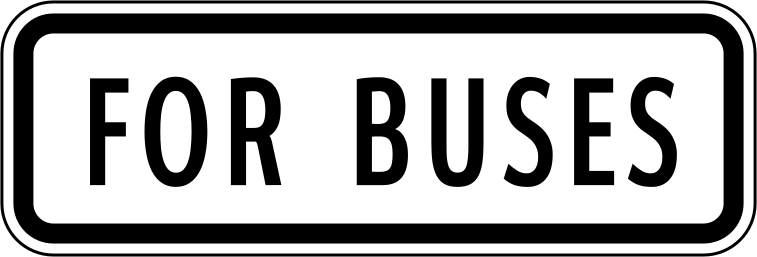
- ABuses and taxis at all times
- BBuses, but only when stopping at a terminal
- CAny vehicle carrying more than four people
- DPublic buses only — private vehicles are prohibited
A bus-only lane is reserved for public buses. A private car using it during the posted hours commits a traffic violation, even in heavy traffic.
Source · Philippine Road Signs and Pavement Markings Manual W8-11B
22Road signsA blue circle contains a single white arrow curving right. What must you do at the junction?
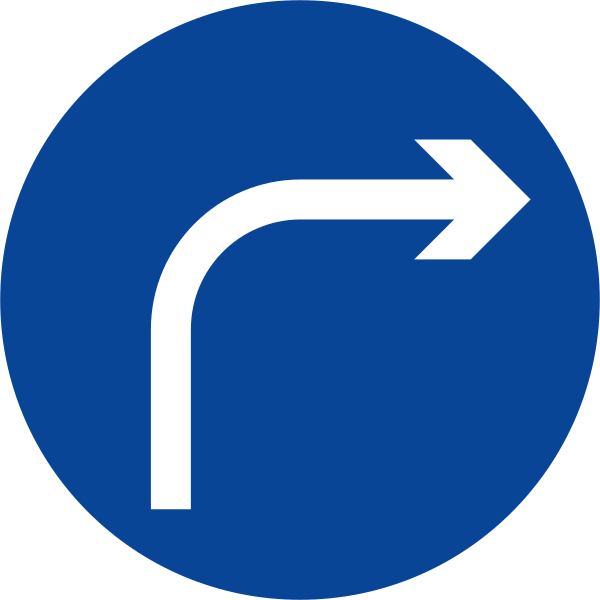
- ADo not turn right under any circumstances
- BTurn right — no other direction is permitted
- CSlow down and check before turning right
- DYield to vehicles already turning right
A blue circle with a white arrow is a mandatory direction sign. At this junction, the right turn is the only legal movement.
Source · Philippine Road Signs and Pavement Markings Manual R2-5
23Road signsA white circle with a red border shows a left-curving arrow under a red slash. What does it mean?
- ANo left turn at this junction
- BA sharp left curve is ahead
- CYield to traffic turning left
- DLeft turns are allowed only on weekends
The slash cancels the left-turn arrow. Continue straight or take another permitted direction; turning left is a violation.
Source · Philippine Road Signs and Pavement Markings Manual R3-14
24Road signsA guide sign names a tunnel ahead. What should you do before entering?
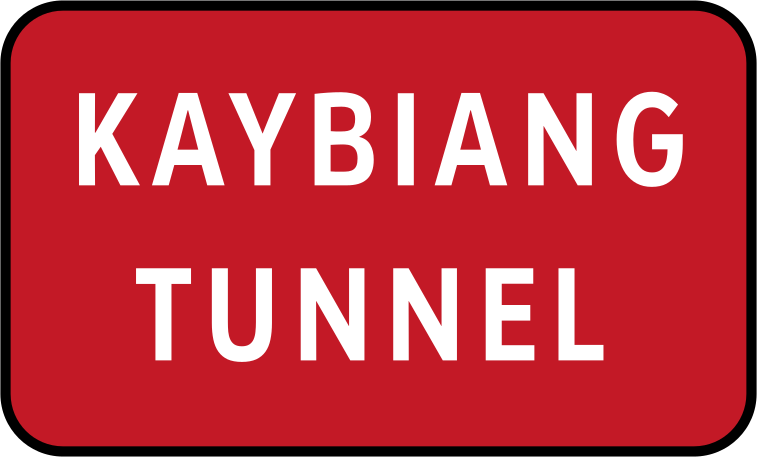
- ASwitch on your headlights and reduce speed
- BStop and wait for the vehicle ahead to clear the tunnel
- CSwitch to high beams for the whole tunnel
- DRemove your seatbelt in case you need to escape
Headlights make you visible to oncoming traffic and light the tunnel walls. Remove sunglasses, keep low beams on and leave space ahead.
Source · DPWH guide signs (G-series)
25Road signsA yellow diamond shows rocks tumbling down a slope. What is the hazard?
- AThe mountain road ends ahead
- BA quarry entrance with heavy trucks
- CA construction site with blasting
- DFalling rocks — do not linger under rocky overhangs
Rockfall is most likely after heavy rain. Keep your speed steady, watch the slope and do not stop directly beneath an overhang.
Source · Philippine Road Signs and Pavement Markings Manual W5-8
26Road signsA blue square carries a white H. What does it indicate?
- AA helipad is reserved for police aircraft
- BA hotel with parking is ahead
- CA highway exit is one kilometre ahead
- DA hospital is nearby — avoid the horn and watch for ambulances
The H is a guide sign for a hospital. Keep noise down, and expect ambulances to enter or leave the road quickly.
Source · DPWH service signs (S-series)
27Road signsA fluorescent yellow-green circle shows a walking figure. What does it mean?
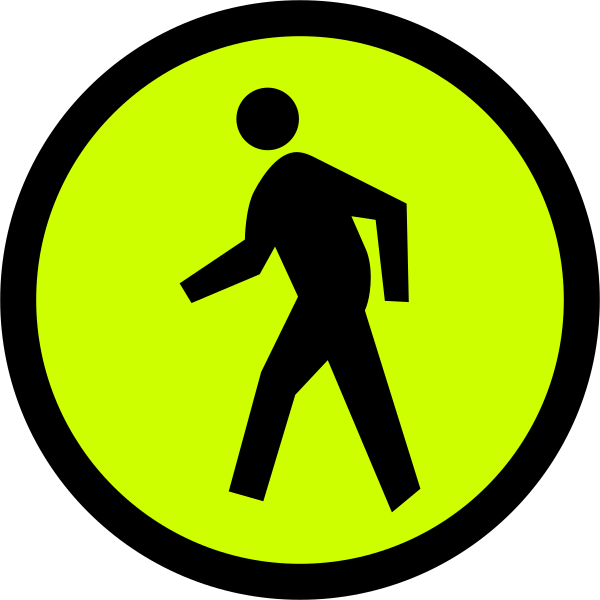
- AThe street is closed to vehicles
- BA bus stop with a covered waiting area
- CThe sidewalk is for pedestrians only
- DA marked pedestrian crossing — vehicles must give way
This guide sign marks a designated crossing. A driver must yield to a pedestrian already on the markings, whether or not a signal is present.
Source · Philippine Road Signs and Pavement Markings Manual R6-8; RA 4136, Land Transportation and Traffic Code, Sec. 42(d)
28Road signsA white circle is crossed by a black diagonal line. What does it mean?
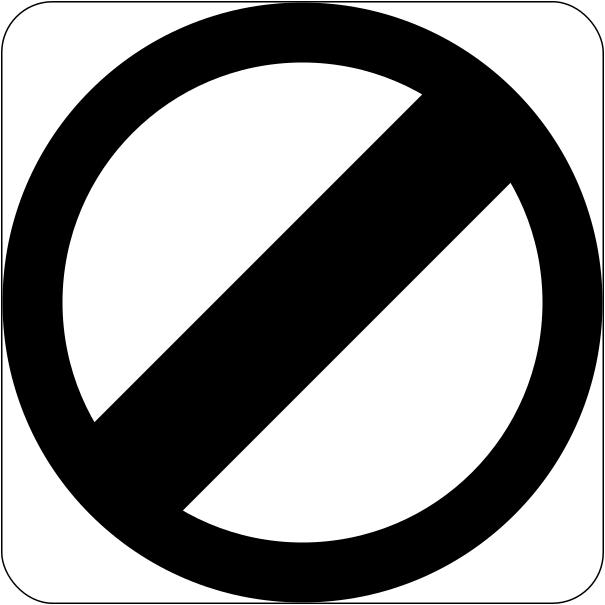
- AThe road is closed to unauthorised vehicles
- BThe minimum speed is 60 km/h
- CThe previous speed restriction ends here
- DSlow to half the posted speed
A diagonal line cancels the restriction it crosses out. Past this sign the default limit for the road applies, so check the next posted limit rather than accelerating blindly.
Source · Philippine Road Signs and Pavement Markings Manual R4-2
29Road signsA sign marks a LOADING ZONE at the kerb. What is allowed there?
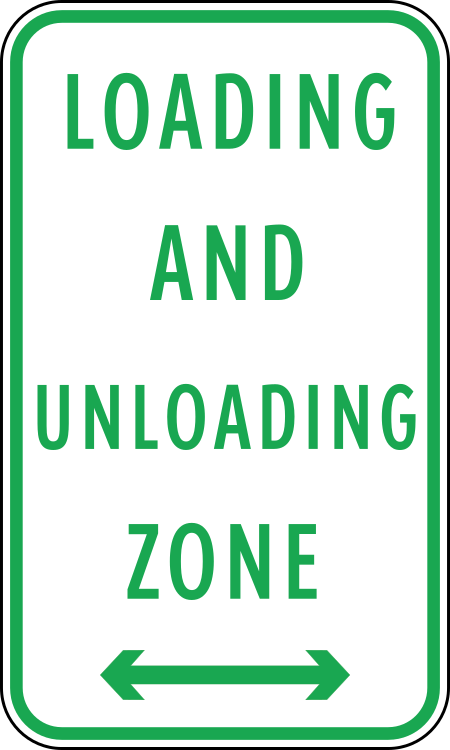
- AA bus stop with no parking at any time
- BLoading or unloading only, usually within a posted time limit
- CParking for heavy vehicles only
- DA cargo inspection bay for trucks
A loading zone is not a parking bay. You may stop to move goods in or out, but leaving the vehicle parked there is a violation.
Source · Philippine Road Signs and Pavement Markings Manual R5-4C
30Road signsA yellow diamond shows the silhouette of cattle or a deer. What should you expect?
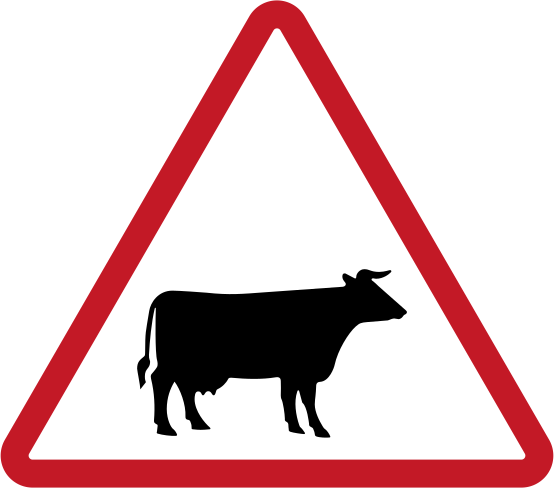
- AA road reserved for farm vehicles
- BWildlife or livestock may cross — slow down and stay alert
- CA petting zoo with a pedestrian entrance
- DA veterinary clinic with a driveway
Animals are most active at dawn and dusk. Reduce speed, watch the roadside and be ready to stop; a collision can write off the car.
Source · Philippine Road Signs and Pavement Markings Manual W5-10
Traffic rules & right of way22 questions
31Traffic rulesTwo cars reach an uncontrolled intersection at the same moment. Who gives way?
- AThe driver on the left gives way to the driver on the right
- BThe driver on the right gives way to the driver on the left
- CWhichever driver accelerates first takes the junction
- DThe smaller vehicle gives way to the larger one
At an uncontrolled intersection, the vehicle on the left yields to the vehicle on the right. Size and speed do not create right of way.
Source · RA 4136, Land Transportation and Traffic Code, Sec. 42
32Traffic rulesWhat is the maximum speed for a passenger car on a through street or boulevard inside a populated area, with no blind corners?
- A40 km/h
- B20 km/h
- C30 km/h
- D60 km/h
RA 4136 sets 40 km/h for passenger cars and motorcycles on through streets and boulevards in populated areas. Trucks and buses are limited to 30 km/h on the same roads.
Source · RA 4136, Land Transportation and Traffic Code, Sec. 35
33Traffic rulesHow early must you signal a turn?
- AOnly for a left turn
- BAs you begin turning the wheel
- CAt least 30 metres before the turning point
- DOnly if a vehicle is visible behind you
Signal at least 30 metres before the turn and keep the signal on until the manoeuvre is complete. A signal is information for everyone else, whether or not you can see them.
Source · RA 4136, Land Transportation and Traffic Code, Sec. 44
34Traffic rulesIn which situation is overtaking another vehicle prohibited?
- AApproaching the crest of a hill or a curve with an obstructed view
- BOn a lane marked for overtaking
- COn a straight, empty road in daylight
- DWhen the vehicle ahead is signalling a right turn
You cannot pass when you cannot see far enough to complete the move safely — a crest, a blind curve, a railway crossing, or within 30 metres of an intersection or crosswalk.
Source · RA 4136, Land Transportation and Traffic Code, Sec. 41
35Traffic rulesWhat is the maximum speed when passing a school while children are present?
- A30 km/h
- B20 km/h
- C40 km/h
- D10 km/h
The limit drops to 20 km/h at a school, hospital or church zone while children or a crowd are present. It is a cap, not a suggested speed.
Source · RA 4136, Land Transportation and Traffic Code, Sec. 35(b)
36Traffic rulesWhen are headlights required?
- AOnly on highways outside the city
- BFrom half an hour after sunset to half an hour before sunrise, and in low visibility
- COnly when another vehicle approaches
- DOnly while it is raining
The statutory window is from 30 minutes after sunset to 30 minutes before sunrise, and any time visibility is poor — fog, heavy rain or dust.
Source · RA 4136, Land Transportation and Traffic Code, Sec. 34
37Traffic rulesBefore reversing on a public road, what must the driver do?
- AMake sure the movement is safe and does not interfere with other traffic
- BSound the horn continuously while moving
- CAsk a passenger to walk behind the vehicle
- DUse only the right-hand mirror
Reversing is permitted only when it can be done with reasonable safety. Check all mirrors, look over your shoulder and yield to traffic and pedestrians.
Source · RA 4136, Land Transportation and Traffic Code, Sec. 47
38Traffic rulesWhen may you overtake on the right?
- AWhen the vehicle ahead is turning left, or on a one-way road with several lanes
- BNever, under any circumstances
- CWhenever the road is wide enough for three cars
- DAt any time on an expressway
Passing on the right is the exception, not the habit. It is allowed when the car ahead is making a left turn, or on a multi-lane one-way road where there is a lane to the right.
Source · RA 4136, Land Transportation and Traffic Code, Sec. 41
39Traffic rulesWhat does an amber traffic light mean?
- ACaution — stop if you can do so safely; the light is about to turn red
- BProceed as if the light were green
- CThe junction is closed and you must reverse
- DAccelerate to clear the junction before red
Amber is the change interval. Stop before the line if you are far enough away; if you are already too close to stop safely, continue through without speeding up.
Source · RA 4136, Land Transportation and Traffic Code, Sec. 38; LTO traffic signal regulations
40Traffic rulesMay you turn right at a red light in the Philippines without a sign?
- AYes, at every junction, without stopping
- BOnly where a Right Turn on Red sign is explicitly posted
- CYes, but only after stopping first
- DNo — a right turn on red is never allowed
Right turn on red is not a default rule here. It applies only where a sign permits it, and even then you must come to a complete stop and yield before turning.
Source · LTO traffic signal regulations
41Traffic rulesAn ambulance approaches from behind with its siren and lights on. What should you do?
- ASound your horn to warn the cars ahead
- BHold your speed and lane so it can plan around you
- CPull to the right edge of the road and stop until it passes
- DMove into the left lane and keep driving
Give way to an emergency vehicle using its siren and flashing lights. Pull to the right, stop and stay put until it has passed — do not stop in the middle of the lane.
Source · RA 4136, Land Transportation and Traffic Code, Sec. 49
42Traffic rulesA pedestrian is already on a marked crosswalk with no traffic signal. What must you do?
- AKeep your speed and pass behind them
- BStop only if the pedestrian raises a hand
- CSound the horn so they hurry across
- DYield and stop if necessary to let them finish crossing
At an unsigned marked crosswalk, the pedestrian has the right of way. Approach slowly enough that you can stop, and never crowd the stripes.
Source · RA 4136, Land Transportation and Traffic Code, Sec. 42(d)
43Traffic rulesHow should you signal a lane change?
- ASignal continuously from before the move until it is complete
- BUse a hand signal only on the highway
- CSignal only when another car is visible
- DChange as soon as a gap appears, then signal
Mirror, signal, check the blind spot, then move — and keep the signal on until you are settled in the new lane. Other drivers cannot react to a signal they never saw.
Source · RA 4136, Land Transportation and Traffic Code, Sec. 44
44Traffic rulesYour turn signal is broken. How do you hand-signal a left turn?
- ALeft arm extended straight out of the driver's window
- BLeft arm bent upward at the elbow, hand pointing up
- CLeft arm bent downward at the elbow, hand pointing down
- DLeft arm waving in a circle
A straight left arm means a left turn. Bent up means a right turn; bent down means slowing or stopping. All three are made with the left arm, the one nearest the driver's window.
Source · RA 4136, Land Transportation and Traffic Code, Sec. 44
45Traffic rulesYour turn signal is broken. How do you hand-signal a right turn?
- ARight hand held up through the windscreen
- BLeft arm extended straight out
- CLeft arm bent upward at the elbow, hand pointing up
- DLeft arm bent downward at the elbow
Bend the left arm up at the elbow with the hand pointing skyward. Keep it visible long enough for the driver behind to read it.
Source · RA 4136, Land Transportation and Traffic Code, Sec. 44
46Traffic rulesYour brake lights have failed. How do you hand-signal that you are slowing or stopping?
- ALeft hand waving up and down
- BRight hand pressed against the rear window
- CLeft arm held horizontally out of the window
- DLeft arm bent downward at the elbow, hand pointing to the road
The stop or slow signal is the left arm bent down, palm facing the road. It is the mirror image of the right-turn signal.
Source · RA 4136, Land Transportation and Traffic Code, Sec. 44
47Traffic rulesUnder RA 11229, what is required for a child below 12 in a private vehicle?
- AOnly a seatbelt is required in the rear
- BAn appropriate child restraint, and the child must not sit in the front seat
- CNo special requirement applies below 12
- DThe child may sit in the front if wearing a seatbelt
The Child Safety in Motor Vehicles Act keeps children under 12 out of the front passenger seat and requires a child restraint system sized for the child.
Source · RA 11229, Child Safety in Motor Vehicles Act
48Traffic rulesUnder RA 10913, what is the rule on mobile phones while driving?
- AAllowed at low speed in traffic
- BAllowed with a hands-free kit while the car is moving
- CHandheld use is prohibited; hands-free use is allowed if it does not distract
- DAlways allowed for calls under one minute
The Anti-Distracted Driving Act bans handheld phones, tablets and similar devices. A hands-free setup is permitted as long as it does not impair your driving.
Source · RA 10913, Anti-Distracted Driving Act
49Traffic rulesHow many passengers may a standard motorcycle carry in addition to the driver?
- AUnlimited if every rider has a helmet
- BTwo passengers, one on each side
- CThree, provided all wear helmets
- DOne back-rider
A standard motorcycle carries the driver and one back-rider. Both must wear a standard protective helmet on a public road.
Source · RA 10054; LTO motorcycle memoranda
50Traffic rulesWhen is the horn meant to be used?
- AContinuously in heavy traffic to clear a path
- BOnly between sunrise and sunset
- CWhenever the driver is frustrated with traffic
- DTo warn another road user of danger, or alert someone who may not see you
The horn is a safety warning device, not a way to express impatience. Avoid it near hospitals and schools, and never use it as a substitute for slowing down.
Source · RA 4136, Land Transportation and Traffic Code, Sec. 51
51Traffic rulesIs tailgating — following closer than is reasonable — legal?
- AYes, on expressways where traffic is slow
- BNo, it is a traffic violation under RA 4136
- CYes, if the vehicle ahead is moving below the limit
- DYes, at speeds below 30 km/h
Following too closely is a violation because it removes your stopping distance. Use the 3-second rule, and stretch it in rain or at night.
Source · RA 4136, Land Transportation and Traffic Code, Sec. 48
52Traffic rulesWhat is the consequence of driving with a revoked licence?
- AThe same penalty as driving without a licence
- BA lighter penalty, because the driver was once licensed
- CA heavier penalty than driving unlicensed, plus possible criminal charges
- DA verbal warning for a first offence
Driving after revocation or suspension is treated more seriously than never having held a licence. Expect a substantial fine, further demerit points and possible criminal liability.
Source · RA 4136, Land Transportation and Traffic Code, Sec. 19; LTO memoranda
Penalties & special laws12 questions
53PenaltiesUnder RA 10054, who must wear a standard motorcycle helmet?
- ABoth, but only on highways
- BBoth the driver and the back-rider, at all times on a public road
- CThe driver only
- DThe back-rider only
The Motorcycle Helmet Act covers the driver and every back-rider. The helmet must meet the Philippine National Standard — a bicycle helmet or a cheap novelty shell is not enough.
Source · RA 10054, Sec. 3
54PenaltiesWhat happens if you are caught driving without a valid licence?
- AA fine, demerit points against the registered owner, and possible extra penalties
- BNo penalty if you are over 18
- CA verbal warning for a first offence
- DThe vehicle is confiscated with no fine
Driving unlicensed carries a fine and demerit points, and the record can follow the registered owner. The vehicle may also be impounded in some cases.
Source · RA 4136, Land Transportation and Traffic Code, Sec. 19; LTO joint memoranda
55PenaltiesWhat is the legal blood-alcohol limit for a non-professional driver of a private car?
- A0.05% blood alcohol concentration
- B0.08% blood alcohol concentration
- CThere is no specific limit
- D0.00% — zero tolerance
Private, non-professional drivers are over the limit at 0.05% BAC. Professional drivers and operators of public utility vehicles, trucks and buses face zero tolerance.
Source · RA 10586, Sec. 5 and its IRR
56PenaltiesUnder the Single Ticketing System, how long do you have to settle a citation?
- A3 days
- B7 days
- C15 working days
- D30 calendar days
Settle within 15 working days from the date of the citation. Weekends, declared holidays and suspended government work do not count, and missing the deadline adds consequences.
Source · LTO joint memorandum on the Single Ticketing System
57PenaltiesUnder RA 8750, who must wear a seatbelt while a private car is moving?
- AOnly occupants on the highway
- BThe driver only
- CThe driver and all front-seat passengers
- DThe driver and the front-seat passenger on the right only
The Seat Belts Use Act covers the driver and every front-seat passenger. Rear-seat belts are required where they are fitted, and children need the appropriate restraint.
Source · RA 8750, Seat Belts Use Act of 1999
58PenaltiesHow does RA 4136 define reckless driving?
- ADriving without a licence in the car
- BDriving at night without headlights
- CDriving a few kilometres over the posted limit
- DDriving without due regard for the safety of persons or property, given the road, weather and traffic
Recklessness is about the standard of care, not a single number on the speedometer. The road type, weather, traffic density and time of day all feed the assessment.
Source · RA 4136, Land Transportation and Traffic Code, Sec. 48
59PenaltiesWhat is the usual consequence of beating a red light?
- AA fine and demerit points; cameras capture it in many areas
- BA free pass if no other vehicle was present
- CAn optional donation to the traffic fund
- DA verbal warning if the road was empty
Running a red light carries a fine and demerit points. Many Metro Manila junctions enforce it with cameras under the No-Contact Apprehension Policy.
Source · LTO joint memoranda; MMDA NCAP rules
60PenaltiesHow do speeding fines work under the current LTO matrix?
- AOne flat amount regardless of the overage
- BOnly drivers under 25 are fined
- CThe fine depends on the colour of the vehicle
- DThe fine scales with how far over the limit you were
The penalty ladder rises with the overage: a minor excess is cheaper than an extreme one, which also adds demerit points and can suspend the licence.
Source · LTO penalty matrix
61PenaltiesWhat happens to a repeat offender under RA 10913?
- AThe licence is revoked on the first repeat
- BThe fines increase and the licence can be suspended
- COnly a warning is issued
- DThe fine stays the same every time
The Anti-Distracted Driving Act escalates the fine for second and later offences, and repeated violations can lead to suspension or revocation.
Source · RA 10913, Anti-Distracted Driving Act
62PenaltiesA driver hits someone and leaves without helping or reporting. What is that?
- AAn administrative offence only
- BNo offence if nobody was injured
- CA minor traffic violation
- DA criminal offence — hit and run — under RA 4136 and the Revised Penal Code
Leaving the scene of a crash is a criminal matter, not a parking ticket. Penalties can include a heavy fine, licence revocation and imprisonment depending on the harm caused.
Source · RA 4136, Land Transportation and Traffic Code, Sec. 55; Revised Penal Code
63PenaltiesHow does the No-Contact Apprehension Policy (NCAP) work?
- AIt applies only to commercial vehicles
- BCameras capture the violation and the citation goes to the registered owner
- CIt covers parking violations only
- DAn enforcer must always hand the ticket to the driver
NCAP uses cameras instead of a roadside stop. The notice is sent to the registered owner, even if someone else was driving at the time.
Source · LTO and LGU NCAP implementing rules
64PenaltiesWhat triggers a licence suspension under the demerit point system?
- AA single minor violation
- BAny traffic ticket at all
- CFailing to renew the licence card on time
- DAccumulating a set number of points within a defined period
Demerit points accumulate. Crossing the threshold within the period can suspend the licence, and a much higher total can cancel it — which is why settling a ticket matters.
Source · LTO joint memorandum on the Single Ticketing System
Defensive driving8 questions
65DefensiveWhat is the minimum recommended following distance on a dry road at normal speed?
- AHalf a car length
- B3 seconds
- C1 second
- D10 seconds
Pick a fixed point; when the car ahead passes it, you should not reach it for at least 3 seconds. In rain, fog or at night, stretch that to 4–6 seconds.
Source · LTO Defensive Driving Curriculum; DO 2017-011
66DefensiveYour car begins to hydroplane on a wet road. What should you do?
- AAccelerate to push through the water
- BTurn sharply towards the dry part of the road
- CBrake hard to regain traction
- DEase off the accelerator, hold the wheel straight and let the car slow
The tyres have lost contact with the road. Braking or steering sharply makes it worse; lift off gently, keep the wheel straight and wait for grip to return.
Source · LTO Defensive Driving Curriculum
67DefensiveHow should a defensive driver approach an intersection?
- AAccelerate to clear the junction quickly
- BSlow down, scan left-right-left and be ready to stop even on green
- CSound the horn to warn cross traffic
- DKeep speed and trust the green light
A green light gives you right of way, not a guarantee. Scan the junction, cover the brake and expect someone else to run their red.
Source · LTO Defensive Driving Curriculum
68DefensiveWhat does the defensive-driving process SIPDE stand for?
- AStop, Inspect, Plan, Drive, Exit
- BSlow, Inform, Park, Drive, Engage
- CStop, Inform, Pause, Detect, Engage
- DScan, Identify, Predict, Decide, Execute
Scan the scene, identify the hazards, predict what each might do, decide on a response and execute it early. The value is in doing it continuously, not once.
Source · LTO Defensive Driving Curriculum
69DefensiveWhat is a vehicle's blind spot?
- AThe strip cleared by the windscreen wipers
- BThe area directly in front of the bonnet
- CThe area around the car that the mirrors do not show
- DThe pool of light cast by the headlights
Blind spots sit behind and beside the car, outside the mirror view. Turn your head to check before a lane change and set the mirrors to shrink the gap.
Source · LTO Defensive Driving Curriculum
70DefensiveWhich is a core principle of the Smith System?
- AAim high in steering — look far ahead, not at the car in front
- BUse the mirrors only when reversing
- CDrive at the legal maximum whenever possible
- DStay in the right lane on every road
Aim high in steering means looking 15 seconds down the road so you see the developing hazard before the car ahead reacts to it.
Source · LTO Defensive Driving Curriculum (Smith System)
71DefensiveWhat is the safer practice when driving at night?
- ADrive faster to clear the road sooner
- BTurn off the radio to stay awake
- CIncrease following distance and avoid staring at oncoming headlights
- DUse high beams continuously
Night driving cuts your sight distance, so leave 4–6 seconds. Look towards the right edge of your lane when a car approaches, and dip the high beams for traffic.
Source · LTO Defensive Driving Curriculum
72DefensiveThe rear of your car starts to skid sideways. What is the correct response?
- ABrake hard immediately
- BAccelerate to straighten the car
- CSteer away from the skid
- DSteer into the skid and ease off the accelerator
Point the front wheels where the rear is sliding and lift off gently. Hard braking or counter-steering usually spins the car instead of saving it.
Source · LTO Defensive Driving Curriculum
Licensing & requirements3 questions
73LicensingWhat must a student permit holder complete before applying for a non-professional licence?
- AOwn a vehicle registered in their name
- BPay the registration fee for a car
- CHold the permit for at least one month and finish the TDC and PDC
- DPass the written exam only
Under DO 2017-011 you must hold a student permit for at least one month, complete the 15-hour Theoretical Driving Course and the 7-hour Practical Driving Course, then apply.
Source · LTO Department Order 2017-011
74LicensingWhat does the Restriction Code on a Philippine driver's licence show?
- AThe fee you paid for the card
- BThe types and categories of vehicle you are authorised to drive
- CThe number of violations on your record
- DThe date the licence expires
Restriction codes set the vehicle classes you may drive — for example code 1 for motorcycles and motorised tricycles, code 2 for vehicles up to 4,500 kg, code 3 above that.
Source · LTO Department Order 2017-011
75LicensingA driver with a clean record is issued a licence today. What is the maximum validity?
- A1 year
- B5 years
- C20 years
- D10 years
A clean record qualifies for the 10-year licence. A driver with accumulated demerit points gets a 5-year validity instead, so the record directly affects the card.
Source · LTO memorandum circular on 10-year licence validity
Not an official LTO publication. Each answer names the law or manual it rests on; the real exam writes its own items around the same rules.
Advertisement
How the 2026 LTO written exam works
The 2026 LTO written exam has 40 multiple-choice questions for a non-professional licence and 60 for a professional licence. You need 75% to pass — 30 correct out of 40, or 45 correct out of 60. The paper is taken on a computer at an LTO or accredited testing centre, after the student-permit and driving-course requirements.
| Licence | Questions | Correct to pass | Mistakes allowed |
|---|---|---|---|
| Non-professional | 40 | 30 | 10 |
| Professional | 60 | 45 | 15 |
Non-professional licence
40 questions
30 correct to reach the 75% passing mark.
Professional licence
60 questions
45 correct to reach the 75% passing mark.
Passing score
75%
The same threshold for both licence types.
Format
Multiple choice
Taken on a computer at an LTO or accredited testing centre.
The step-by-step route to the exam
- Hold a student permit for at least one month. Apply for a student permit first. Under LTO Department Order 2017-011 you must hold it for at least one month before you can apply for a non-professional licence.
- Finish the TDC and PDC. Complete the 15-hour Theoretical Driving Course, available through the LTMS portal, and the 7-hour Practical Driving Course at an accredited driving school.
- Prepare the application. Bring your student permit, TDC and PDC certificates, a medical certificate and the application fee, and book an appointment through the LTMS portal.
- Take the written exam. The computer-based exam has 40 questions for a non-professional licence or 60 for a professional licence. You need 75% to pass.
- Take the practical exam. After passing the written test, take the practical driving test. Once both are passed, the licence is issued with the restriction codes you qualified for.
Requirements and fees can change, and the LTO office can ask for additional documents. Confirm the current checklist on the LTMS portal before your appointment.
What the LTO exam covers
The exam is weighted towards road signs and traffic rules, but the written paper still tests the special laws and defensive driving. The table below is the blueprint this reviewer uses, and the same proportions drive the Mock 40 and Mock 60. It is a study plan, not a claim that the LTO publishes its live item distribution.
| Topic | In the bank | Mock 40 | Mock 60 |
|---|---|---|---|
| Road signs & markings | 30 | 16 | 24 |
| Traffic rules & right of way | 22 | 12 | 18 |
| Penalties & special laws | 12 | 6 | 9 |
| Defensive driving | 8 | 4 | 6 |
| Licensing & requirements | 3 | 2 | 3 |
| Total | 75 | 40 | 60 |
Road signs & markings
Learn the shape first — octagon means stop, inverted triangle means yield, diamond warns, circle regulates. Then learn the exceptions.
Traffic rules & right of way
Right of way at an uncontrolled corner, the 40 km/h urban limit, the 20 km/h school zone and the hand signals are the highest-yield facts.
Penalties & special laws
Match each law to its number and its rule. RA 10054 is helmets, RA 8750 is seatbelts, RA 10913 is phones, RA 11229 is child seats.
Defensive driving
The 3-second rule, steer into a skid, ease off when hydroplaning, and scan left-right-left at every junction.
Licensing & requirements
One month on a student permit, 15-hour TDC, 7-hour PDC, restriction codes 1–3, and 10 years for a clean record.
Advertisement
Road signs you must recognise
Learn the shape before the picture. An octagon means stop, an inverted triangle means give way, a red-bordered triangle warns, a red-bordered circle regulates, and a blue circle gives a mandatory direction. These twelve are the highest-yield set — the rest are in the question bank.
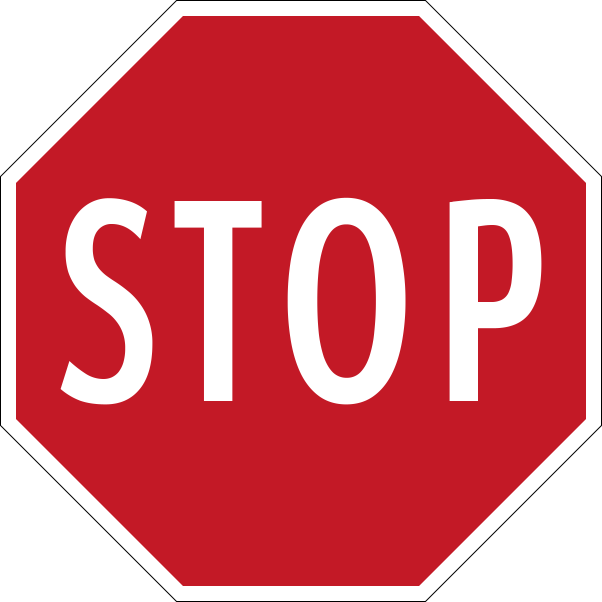
STOP
Stop completely at the line — both wheels stationary — then go only when it is safe.
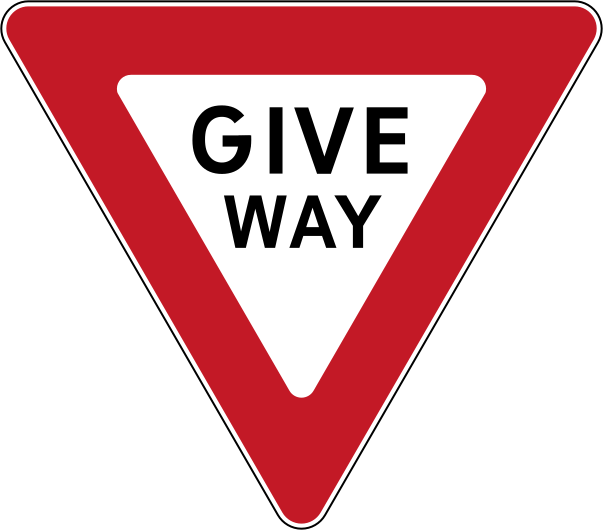
YIELD / GIVE WAY
Slow down and give way to traffic on the main road. Stop only if you must.
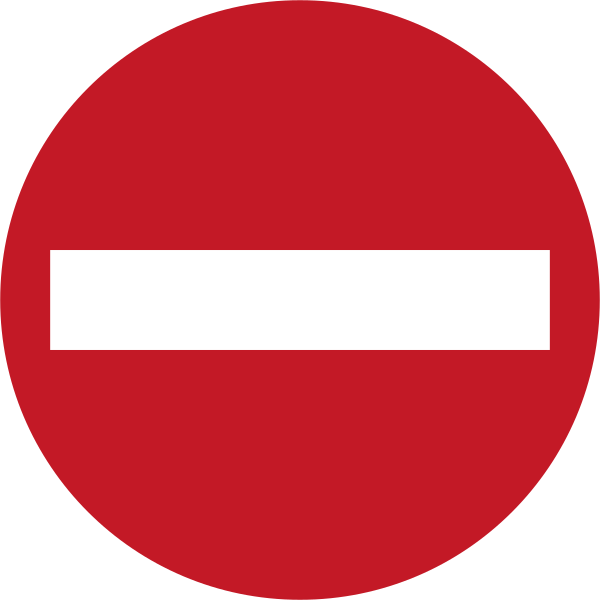
NO ENTRY
No vehicle may enter this road. Often posted at the exit of a one-way street.
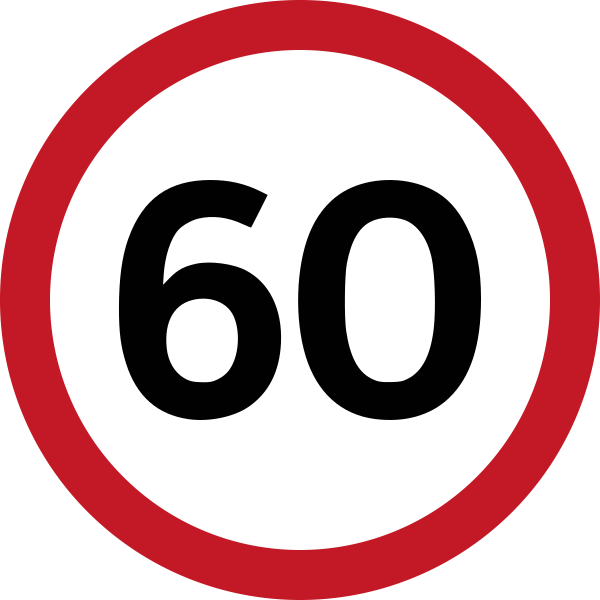
SPEED LIMIT 60
The maximum permitted speed is 60 km/h. A blue circle is a minimum, not a limit.
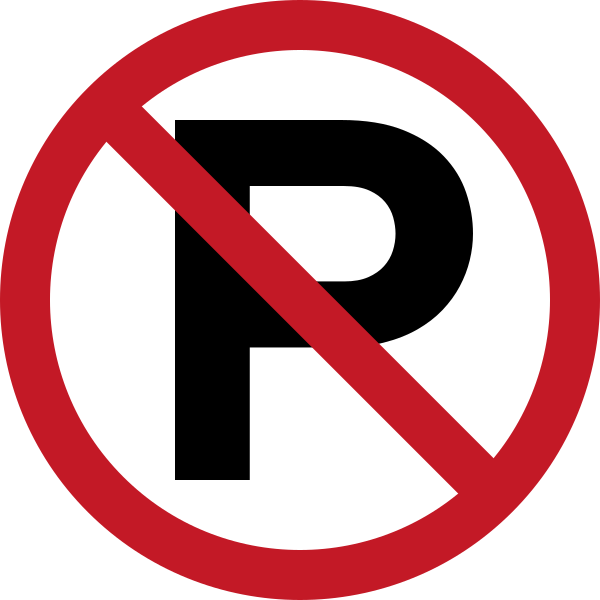
NO PARKING
Do not leave the vehicle parked here. A brief stop to load or unload may still be allowed.
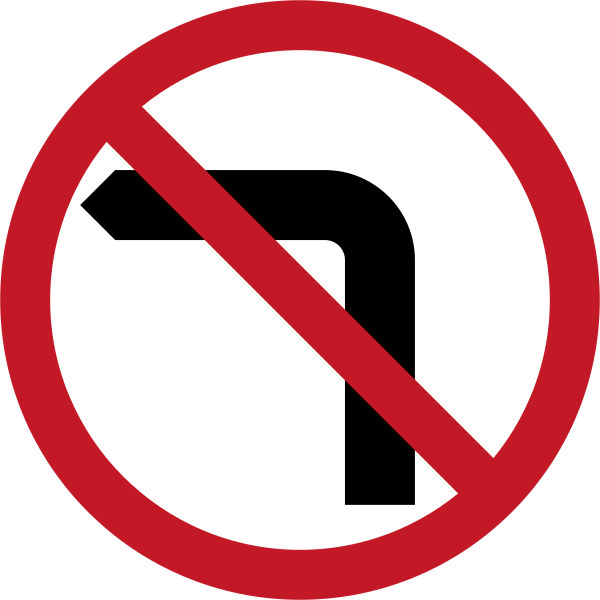
NO LEFT TURN
The left turn is prohibited at this junction. Continue straight or turn right.
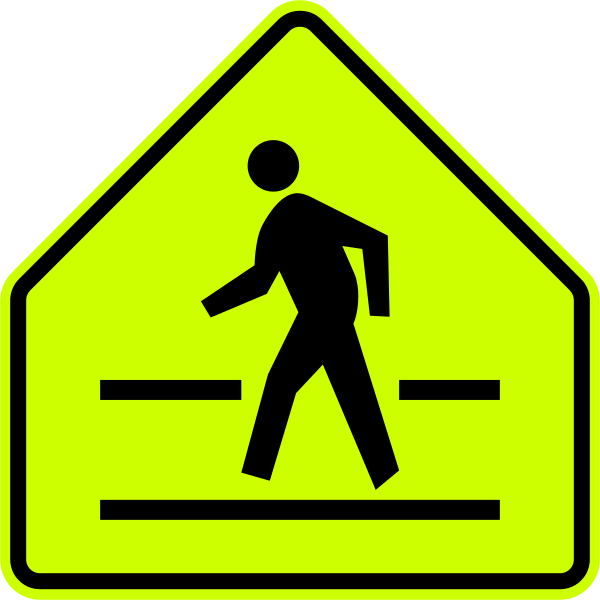
PEDESTRIAN CROSSING
A crossing is ahead. Reduce speed and be ready to stop for someone on the stripes.
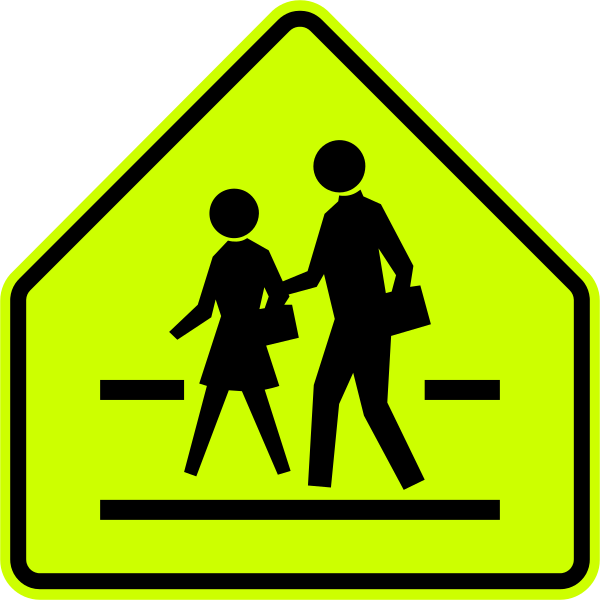
SCHOOL ZONE
Children may cross. The limit drops to 20 km/h while children are present.
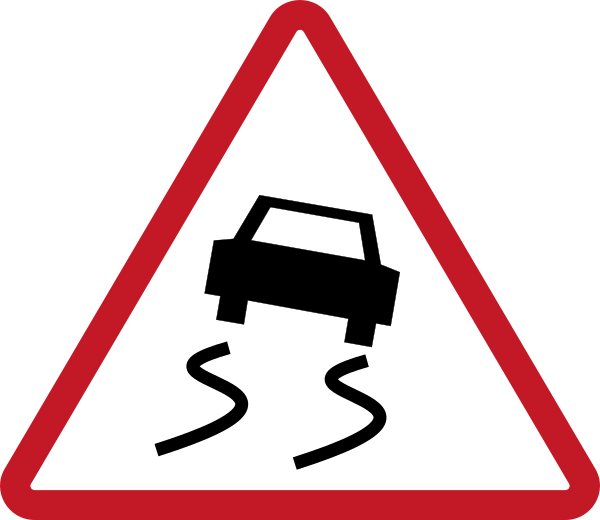
SLIPPERY WHEN WET
The surface loses grip in rain. Slow down and leave more following distance.
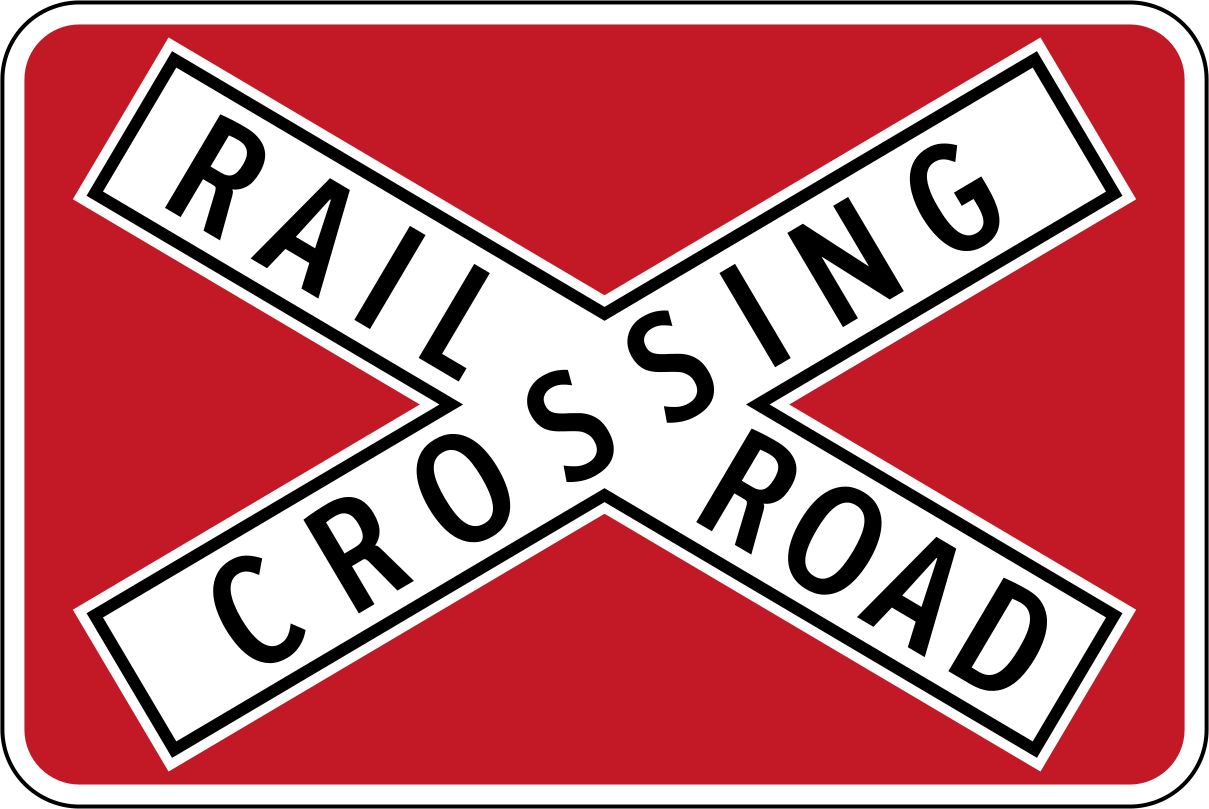
RAILROAD CROSSING
A railway crosses ahead. Slow down, look both ways and stop if a train is coming.
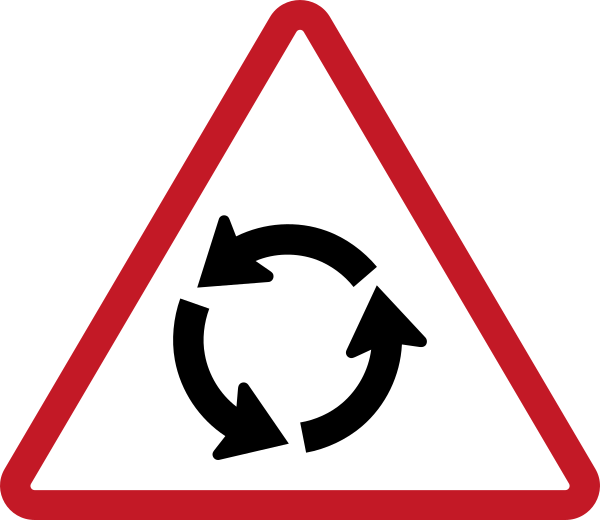
ROUNDABOUT
A rotunda is ahead. Slow down and yield to traffic already circulating.
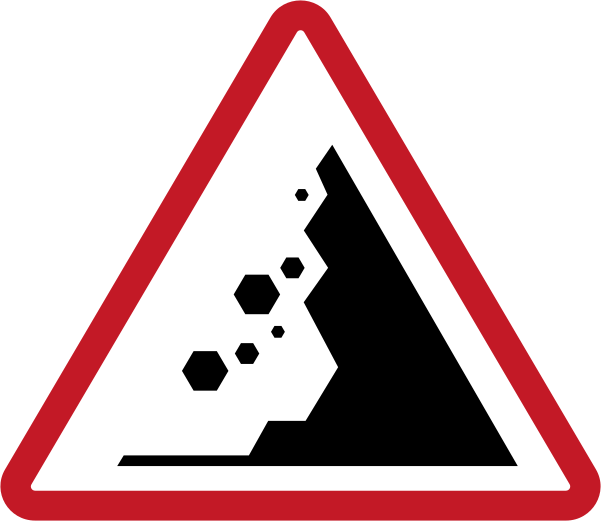
FALLING ROCKS
Loose rock may fall on the road ahead. Slow down and do not stop under an overhang.
Two markings people confuse: a solid yellow line separates opposing traffic and forbids overtaking, while a solid white line separates lanes going the same way and discourages lane changes. A broken line on either side means the move is permitted when it is safe.
A seven-day study plan
Seven days is enough for a first sitting if you practise actively. Each day below feeds the next, and every step points at a mode inside the practice test above.
- Day 1Run a diagnosticTake the Quick 10 without studying. Write down the category you missed most — that is the one to start with, not the one you enjoy.
- Day 2Signs by shapeLearn the 30 signs in the bank by shape and colour: octagon stop, inverted triangle yield, diamond warning, circle regulation, blue square guide. Draw the ten you keep missing.
- Day 3Signs in contextDrill the road-sign category until you clear 90%. Then read the pavement-marking questions — solid white versus solid yellow is a favourite.
- Day 4Right of way and speedMemorise the uncontrolled-corner rule, the 40 km/h urban limit, the 20 km/h school zone, the 30-metre signal, and when overtaking is prohibited.
- Day 5Penalties and special lawsMake a five-row table: helmet (RA 10054), seatbelt (RA 8750), phone (RA 10913), child seat (RA 11229), drink driving (RA 10586). Add the 15-working-day settlement rule.
- Day 6Defensive driving and licensingLearn the 3-second rule, SIPDE, steer-into-the-skid, hydroplaning, and the student-permit path: one month, 15-hour TDC, 7-hour PDC.
- Day 7Sit a full mockTake the Mock 40 or Mock 60 in one sitting. Review every wrong answer, then retake only those questions. Book the real exam once you clear 75% twice.
The last run matters most: a full 40- or 60-question mock, in one sitting, with no answer feedback until the end. If you clear 75% twice, book the real slot.
LTO exam questions, answered
How many questions are in the LTO written exam in 2026?
The written exam has 40 questions for a non-professional licence and 60 questions for a professional licence. The passing mark is 75%, so you need 30 correct out of 40, or 45 correct out of 60.
What is the passing score for the LTO exam?
75% for both licence types. There is no separate passing mark for a category — the total score is what counts, so a weak topic can be carried by a strong one, but only up to ten wrong answers on the 40-item paper.
Is this LTO exam reviewer official?
No. ParkinganPH is independent and not affiliated with the LTO. The questions are written for this page and each answer cites the Republic Act, department order or road-sign manual it rests on. The LTO does not publish its live question bank, so no reviewer can honestly promise the exact items.
How long must I hold a student permit before taking the non-professional exam?
At least one month. Under LTO Department Order 2017-011 you must also complete the 15-hour Theoretical Driving Course and the 7-hour Practical Driving Course at an accredited school before you can apply for the non-professional licence.
What is the difference between a non-professional and a professional licence?
A non-professional licence covers a private vehicle, generally up to 4,500 kg. A professional licence is required to drive for hire or to operate heavier vehicles such as trucks and buses. The restriction codes printed on the card list the exact vehicle classes you may drive.
How many mistakes can I make on the LTO written exam?
Ten on the 40-question non-professional paper, and fifteen on the 60-question professional paper. That is the 75% threshold. Anything below it means a retake, so aim for a buffer rather than studying to exactly 30 or 45.
Are these the actual questions on the LTO exam?
No. These are study questions built around the same laws, signs and driving rules the exam tests. The real paper is not public. Use the explanations and citations to learn the rule, not to memorise a letter — the exam can phrase the same rule a different way.
How long is a Philippine driver's licence valid?
Ten years for a driver with a clean record, or five years if demerit points have accumulated. The licence still has to be renewed, and the record is checked at renewal — which is why the demerit rules matter after you pass.
What does a yellow traffic light mean in the Philippines?
Caution: the signal is about to turn red. Stop before the line if you can do so safely. If you are already too close to stop safely, continue through the junction without accelerating.
Can I retake the LTO exam if I fail?
Yes. You can rebook the exam, but the LTO sets the retake schedule and the fees. Treat a failed attempt as a diagnostic: review the categories you missed, then sit a full 40- or 60-question mock before booking again.
Advertisement
Sources and disclaimer
This is an independent study guide, not an official LTO publication, and it is not affiliated with the LTO. The LTO does not release its live question bank; these items teach the rules the exam tests. Requirements, fees and procedures can change — confirm them with the LTO before your appointment. The content here was last checked on October 19, 2026.
Every answer cites the law, department order or road-sign manual it rests on. Primary sources:
- Republic Act No. 4136 — Land Transportation and Traffic Code
- Republic Act No. 8750 — Seat Belts Use Act of 1999
- Republic Act No. 10054 — Motorcycle Helmet Act of 2009
- Republic Act No. 10586 — Anti-Drunk and Drugged Driving Act of 2013
- Republic Act No. 10913 — Anti-Distracted Driving Act
- Republic Act No. 11229 — Child Safety in Motor Vehicles Act
- LTO — official site and memorandum circulars
- LTMS portal — appointments, records and the online TDC
The road-sign questions follow the sign families and pavement markings in the Philippine Road Signs and Pavement Markings Manual. The sign images are the DPWH-standard SVG diagrams from Wikimedia Commons, not redrawn copies — mostly public domain, with two CC BY-SA 4.0 files, credited below.
Sign image credits — 27 files from Wikimedia Commons
- Philippines road sign R1-1.svg — Department of Public Works and Highways; derivative work by Hariboneagle927, Fry1989, HueMan1 (Public domain)
- Philippines road sign R1-2.svg — Department of Public Works and Highways; derivative work by FOX 52, Fry1989 (Public domain)
- Philippines road sign R3-15.svg — Department of Public Works and Highways; derivative work by TagaSanPedroAko, Fry1989 (Public domain)
- Philippines road sign W6-1.svg — Government of the Philippines; derivative work by Fry1989 (Public domain)
- Philippines road sign W5-9.svg — Department of Public Works and Highways; sign redrawn by TagaSanPedroAko (Public domain)
- Philippines road sign R4-1 (60).svg — Government of the Philippines; derivative work by Fry1989 (Public domain)
- Philippines road sign R2-2P R.svg — Department of Public Works and Highways; derivative work by Fry1989, TagaSanPedroAko (Public domain)
- Philippines road sign R3-1.svg — Government of the Philippines; derivative work by Fry1989 (Public domain)
- Philippines road sign W2-7.svg — Department of Public Works and Highways; sign redrawn by TagaSanPedroAko (Public domain)
- Philippines road sign R3-16.svg — Department of Public Works and Highways; derivative work by TagaSanPedroAko (Public domain)
- Philippines road sign W1-3 R.svg — Government of the Philippines; derivative work by Fry1989 (Public domain)
- Philippines road sign W6-2.svg — Government of the Philippines; derivative work by Fry1989 (Public domain)
- Philippines road sign W5-4 R.svg — Department of Public Works and Highways; sign redrawn by TagaSanPedroAko (Public domain)
- Philippines road sign R2-7.svg — Government of the Philippines; derivative work by Fry1989 (Public domain)
- Philippines road sign W5-2.svg — Department of Public Works and Highways; derivative work by HueMan1 (Public domain)
- Philippines road sign W7-4.svg — Department of Public Works and Highways; derivative work by Fry1989, Offnfopt (Public domain)
- Philippines road sign R5-1S.svg — Department of Public Works and Highways; derivative work by TagaSanPedroAko (Public domain)
- Philippines road sign S2-1.svg — Department of Public Works and Highways (Public domain)
- Philippines road sign W8-11B.svg — HueMan1 (CC BY-SA 4.0)
- Philippines road sign R2-5 R.svg — Government of the Philippines; derivative work by Photo07 (Public domain)
- Philippines road sign R3-14.svg — Department of Public Works and Highways; derivative work by TagaSanPedroAko, Fry1989 (Public domain)
- Philippines road sign Kaybiang Tunnel.svg — HueMan1 (CC BY-SA 4.0)
- Philippines road sign W5-8 R.svg — Department of Public Works and Highways; derivative work by Photo07, Fry1989 (Public domain)
- Philippines road sign R6-8.svg — Government of the Philippines; derivative work by Fry1989 (Public domain)
- Philippines road sign R4-2.svg — Department of Public Works and Highways (Public domain)
- Philippines road sign R5-4C.svg — Department of Public Works and Highways; sign redrawn by TagaSanPedroAko (Public domain)
- Philippines road sign W5-10.svg — Government of the Philippines; derivative work by Fry1989 (Public domain)
Ready for the real slot?
Book through the official LTMS portal — and use the mock until you clear 75% twice in a row.