MMDA May Huli Ka
Nobody pulled you over. A camera did, a person reviewed it, and a notice is on its way to the registered owner. Here is how to check it, what the ten working days really come to, and the four things that tell an MMDA alert from a scam.
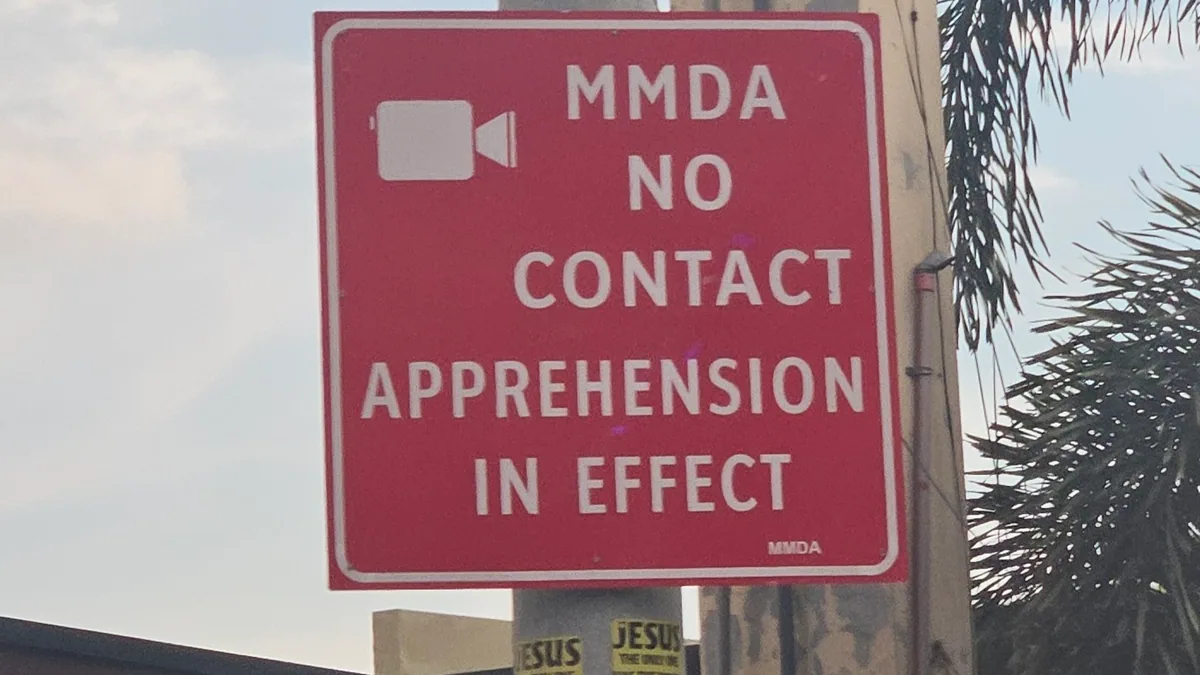
The short answer
“May Huli Ka” — “you got caught” — is the MMDA’s own portal for its No Contact Apprehension Policy. It went live on 16 June 2025 at mayhulika.mmda.gov.ph, and since July 2026 the same check runs inside the eGovPH app. You type a plate and a number from your Certificate of Registration, and it tells you whether a camera has recorded a violation against the vehicle — and what it wants.
The policy itself is older and less settled than the portal makes it look. The MMDA has run it since 2016 under a resolution rather than a statute; the Supreme Court stopped it for nearly three years; and it only fully returned in 2026. Three things decide whether any of that matters to you:
- The camera only sees the outside of the car. Nine offences carry a fine in the published schedule and almost nothing else does — no phone in a hand, no unlicensed driver, no expired document. If a notice cites something a fixed camera could not have photographed, that is the first thing to look at.
- Roughly half of what the cameras flag gets thrown out. In the first nine days the MMDA recorded 8,586 violations and confirmed 4,100 — 52% did not survive review. Checking is not paranoia; it is the step the process is built around.
- The deadline is the whole case. Ten working days from the day the notice reaches you, not from the day of the violation. Miss it and the fine stops being arguable.
And one thing worth saying plainly, because the policy created it: the MMDA texts you, so anybody can pretend to. An official alert names the plate, gives you ten working days and carries no link and no name. There is a scam check further down.
Advertisement
Checking a plate
The portal asks for two things and gives you three ways to supply them. Most guides mention one of the three, which is why so many people give up on the screen that says “no record found”.
Plate + MV file number
Your plate number and the 15-digit MV file number
Both are printed on the Certificate of Registration — the MV file number is at the top right, not the engine or chassis number.
The default. Works whether or not a notice ever reached you.
Plate + ticket number
Your plate number and the ticket number from the notice
The ticket number is on the Notice of Violation, beside the reference number.
When you are holding the notice and want its record specifically.
MV file number alone
Just the 15-digit MV file number
Certificate of Registration again. Added to the portal in August 2026.
When the plate has been replaced, transferred or is unreadable.
The MV file number is the one people get wrong. It is fifteen digits, printed on the Certificate of Registration — not the plate, not the engine number, not the chassis number, and not the driver’s licence. A single mistyped digit returns the same “no record” screen as a clean plate, which is the trap.
“No record found” is not the same as “you are clean”. It means no MMDA NCAP record matched what you typed. A city-issued ticket lives in the city’s system, a roadside ticket from an enforcer lives wherever that enforcer works, and a record can simply not have been encoded yet. The portal covers the MMDA’s policy — not every ticket in Metro Manila.
The eGovPH app does the same job differently: you register the vehicle once — scanning the Certificate of Registration instead of typing it — and then the app shows any violation against it with the amount and the payment status. One account can hold several vehicles, which is the version that makes sense for a household or a small fleet.
What it costs — and what the camera could actually see
This is the part every other page prints as a table. The table is here too, but the interesting column is the second one: whether a fixed camera could evidence the offence at all. It is the difference between a fine you argue and a fine you pay.
What were you flagged for?
Notice of violation
Disregarding traffic signs
Amount due
₱1,000
A fixed camera and plate recognition are enough on their own. Contesting this means attacking the location or the signage, not the photograph.
Your strongest ground
The sign was not there, was facing the wrong way, or was hidden behind foliage or a parked truck. The MMDA's own stated policy is that NCAP is not enforced where markings and signage are defective — a photograph of the empty pole is the whole case.
The single most-recorded NCAP offence, on day one and in the first week.
The amount on your own notice is the one that counts — this is the published schedule, and the range on reckless driving is an adjudicator’s call rather than a lookup. Where a city has its own ordinance, the city’s schedule applies to the city’s ticket.
Pick the offence on your notice and it shows the amount, whether the camera can see it, and the ground a contest actually rests on. Three of the nine are marked as a camera’s offence in the clearest sense — a sign ignored, a red light beaten, a box entered. The rest are marked arguable, because one frame of a car is not the same thing as proof of what the car did.
| Offence | Fine | A camera sees it? |
|---|---|---|
| Disregarding traffic signs | ₱1,000 | Yes — on its own |
| Number codingUVVRP | ₱500 | Yes — on its own |
| Speeding | ₱1,000 | Yes — on its own |
| Beating the red light | ₱2,000 | Yes, but arguable |
| Illegal parkingon a covered road | ₱1,000–₱2,000 | Yes, but arguable |
| Illegal lane changeswerving | ₱2,000 | Yes, but arguable |
| Stopping on a yellow box | ₱1,000 | Yes — on its own |
| No seatbelt | ₱1,000 | No — inside the cabin |
| Reckless driving | ₱2,000–₱10,000 | Yes, but arguable |
The amounts are the MMDA Single Ticketing System as reproduced by the write-ups that publish it; we could not read the circular itself. The figure printed on your own notice is the one that counts, and where a city has an ordinance of its own, the city’s schedule applies to the city’s ticket.
The number-coding fine is the one that trips people up. Under the MMDA schedule it is ₱500. Makati’s own ordinance escalates through ₱1,000, ₱2,000 and ₱5,000 — and that is enforced by Makati’s enforcers, not by an MMDA camera. A page that quotes the Makati ladder for a Commonwealth Avenue ticket has mixed up two governments.
The ten working days, counted properly
Ten working days sounds like a fortnight and is usually a little more. It starts the day after the notice reaches you — which is why the envelope matters, and why throwing it away is the most expensive thing you can do with it — and it skips weekends and declared holidays.
Last day to file a contest
Monday, October 19, 2026
10 working days
- 6
- 7
- 8
- 9
- 10
- 11
- 12
- 13
- 14
- 15
- 16
- 17
- 18
- 19
working dayweekendholiday
The clock starts the day after the notice reaches you, not the day of the violation. That is why the envelope matters: a notice posted on the 3rd and delivered on the 9th gives you ten working days from the 10th. Miss the window and the fine stops being arguable — it becomes a debt with an alarm attached to your plate.
The rule is the whole case. Inside the window you can contest, and a contest suspends the obligation while it is heard. Outside it, the notice becomes a debt: the plate goes onto the LTO’s alarm list, and an alarmed plate cannot be registered, cannot be transferred, and cannot clear until the fine is settled.
That is the chain worth understanding, because it is where an ₱500 ticket becomes a much larger problem. The registration renewal you turn up for months later is refused at the counter, and the weekly late fee on the registration starts running while you sort out a fine you could have contested in ten days.
Advertisement
Where the cameras are
NCAP is not city-wide. It sits on a named network of 15 roads, and the naming is the thing to learn: the C roads circle the capital and the R roads run out of it. A street can be covered in one direction and not the other, because the coverage follows the road, not the neighbourhood.
Where the cameras sit
Tap a ring or a spoke. C roads circle the capital; R roads run out of it.
Rings — you go round
Radials — you go through
C4circumferential
1 road
EDSA
The ring everybody means. One avenue, 24 km, the whole metropolis.
A schematic, not a map: the rings are drawn as rings and the spokes as spokes so the codes are legible, and no distance or direction here should be used to plan a route. The MMDA also runs cameras on West Avenue, E. Rodriguez Avenue, Buendia Avenue (Gil Puyat), the Mabuhay Lanes. No expressway is covered.
Two exclusions are worth carrying with you. The first is stated by the MMDA itself: NCAP is not enforced where road markings and traffic signage are defective or missing. That is not a loophole someone invented on a forum — it is the agency’s own policy, and it is the strongest ground on the commonest offence.
The second is that no expressway is covered. No expressway is covered. NLEX, SLEX, Skyway, SCTEX, TPLEX, CALAX, CAVITEX, NAIAX, the NLEX Connector, C-5 South Link, CCLEX, STAR Tollway and MCX are all privately operated, and a violation there is the concessionaire's, not the MMDA's. A violation on the Skyway is the concessionaire’s, with the concessionaire’s procedure and the concessionaire’s fines — a different page entirely.
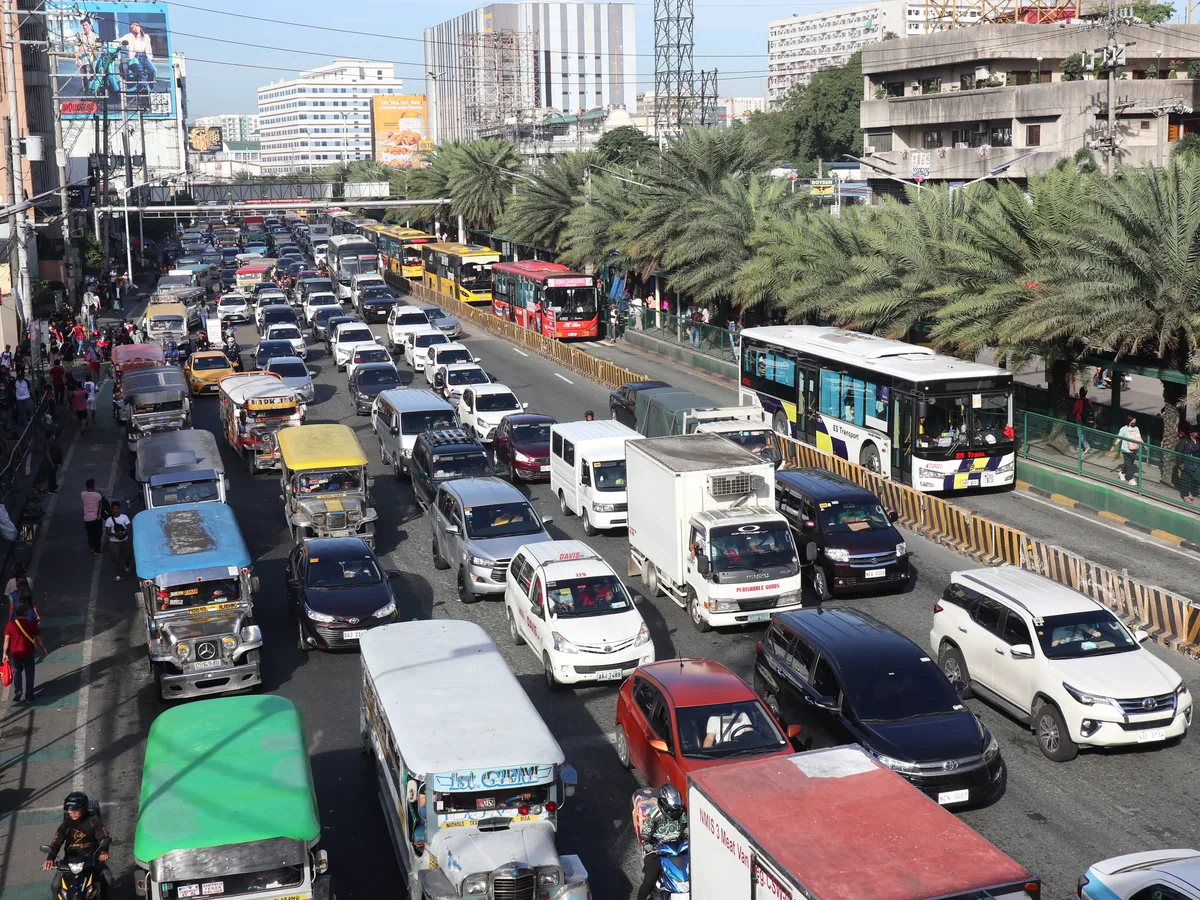
How a notice gets made
Six steps, and only one of them is the camera. Knowing where the human is matters, because the human is both the reason the system works and the reason half its output is wrong.
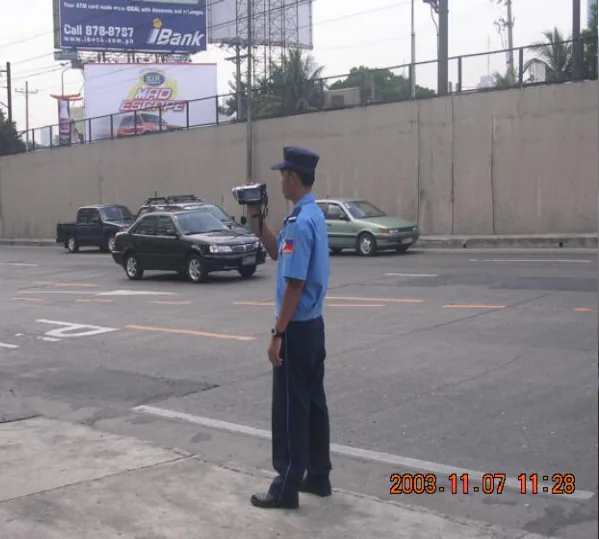
The camera records
CameraA fixed CCTV unit or a handheld camera operated by an MMDA officer captures the plate and the act. Nothing is decided at this point — a flag is not a finding.
A person reviews it
MMDAEvery flag is watched by MMDA staff at the Command Center in Pasig before a notice exists. In the first week of enforcement this stage threw out more than half of what the cameras flagged.
The plate is matched to an owner
LTOThe plate and MV file number are run through the LTO Information Query Facility to find the registered owner — which is why the notice arrives addressed to the owner and not to whoever was driving.
The notice is written
MMDAThe validated record is encoded into the NCAP system and a Notice of Violation is printed with a reference number, the evidence, the date and the amount.
It is sent three ways
PostRegistered mail to the LTMS address — typically five to seven days — plus an SMS from the sender ID MMDA_NCAP and an email from no-reply@mmda.gov.ph. None of the three carries a payment link.
You have ten working days
MMDAFrom the day the notice reaches you, not from the day of the violation. Save the envelope: it is the only proof of the date the clock started.
Step two is where the numbers get interesting. In the first nine days the cameras flagged 8,586 violations and a person confirmed 4,100 — an invalidation rate of 52%. The false positives were the ones you would predict: ambulances in the busway, emergency vehicles, marked government cars, and edge cases the model had no business judging.
Which is the honest reason to check a notice rather than pay it. The system is not a photograph of the truth; it is a photograph, reviewed by a person working through a queue.
Advertisement
Paying
Three routes, and the one you pick decides how long your plate stays on the alarm list. Pay through a channel the portal links to and the record clears on its own; pay by transfer to somebody’s account and you have paid a stranger.
Landbank Link.BizPortal
OnlineThe channel the MMDA links to from the portal itself. Accepts GCash, debit and credit cards.
GCash · Maya · Bayad · iCash
OnlineThe four e-wallets the payment page offers alongside Link.BizPortal.
MMDA Redemption Office
In personGround floor, MMDA Head Office, Julia Vargas Avenue corner Molave Street, Barangay Ugong, Pasig City. 7:00 AM–4:00 PM, Monday to Friday. Bring the reference number, a valid ID and your OR/CR.
Payment reflects at the LTO in 24–48 hours. If the alarm is still there after 72 hours, stop waiting and call 136 with the reference number — and do not pay again, because a second payment is a second refund request. Keep the confirmation until the registration counter accepts your renewal, not just until the receipt arrives.
Contesting
The contest is filed with the MMDA Traffic Adjudication Division — in person at the 11th floor, MMDA New Building, 7:00 AM–4:00 PM, Monday to Friday, or online through the QR code printed on the notice, which opens the MMDA's e-contest form. Contesting is the one thing the eGovPH app does not do. It checks and it pays; the contest goes through the MMDA's own form.
That last sentence is the most useful thing on this page for anyone holding a phone. The eGovPH app is where you check and where you pay; it is not where you argue. A driver who looks for a contest button in the app will not find one and may conclude there is no route at all.
What actually wins a contest is evidence with a timestamp in it:
- Dashcam footage with the date, time and location burned in. A clip without a timestamp is a video of a road.
- GPS history from a navigation app, showing where the vehicle was when the notice says it was somewhere else.
- RFID timestamps from an expressway gantry — the most underrated alibi in the country, and it is already in your account.
- A sworn statement from the actual driver, where the notice went to the owner and somebody else was driving. Liability can move; the notice does not move on its own.
- Proof of sale, where the car was sold before the violation. Until the LTO records the transfer, the notices keep arriving at the old owner’s address.
The strongest ground, though, is usually the dullest one: the notice is wrong about something checkable — the plate, the time, the location, or the road markings. Start there, because it needs no witnesses.
The scam check
This is not a hypothetical. The MMDA has asked the National Bureau of Investigation to look into a scam built on NCAP text messages, and it was still warning motorists about fresh ones in October 2026. The policy texts you; that is the opening a scammer needs.
Official
MMDA_NCAP
A traffic violation was recorded for plate ABC 1234. Verify it on the official MayHuliKa portal using your plate and MV file number. No payment link will be sent.
No reply · no link · no name
The other one
+63 917 000 0000
MMDA TRAFFIC ALERT: Dear JUAN DELA CRUZ, your vehicle ABC 1234 has an unpaid violation of P2,000. Settle within 24 HOURS or your plate will be CANCELLED and a warrant issued. Pay now: mmda-ncap-pay.xyz/gcash
A name · a deadline · a link
The sender
The sender ID reads MMDA_NCAP — a name, not a number.
An ordinary mobile number, often a Globe or Smart prefix, sometimes with a name saved to it.
The link
There is no link. The alert names the portal and you type the address yourself.
A shortened or lookalike link — mayhulika-something, or a URL shortener — and a button to tap.
The clock
Ten working days, counted from the day the notice reaches you.
Pay within 24 hours, or tonight, or the plate is cancelled tomorrow.
The reply
No-reply, on both SMS and email. You cannot answer an official alert.
A number that answers, and a person who offers to settle it for you.
Where the money goes
Landbank Link.BizPortal, an e-wallet biller, or the MMDA cashier. Never a personal account.
GCash to a personal number, or a bank transfer to an account named after a person.
Your name
The alert quotes the plate, not the registered owner's name.
It greets you by full name, which is the detail that makes it feel official and is exactly the detail MMDA withholds.
Both messages above are representative, not quotations — the wording of a real alert varies. What does not vary is the shape: an official one names the plate and nothing else, gives you ten working days, and never hands you a link. If you are holding a suspicious message, do not tap it. Type the portal address yourself, or call the MMDA hotline 136 and report it through the MMDA's official social media accounts, or the National Privacy Commission for a data-protection angle.
One more thing worth knowing before you act on a message: the MMDA’s alerts come from contact details held in the LTO’s system, so an out-of-date number is why some people never hear about a notice at all and find out at the renewal counter. Updating your contact details at the LTO is the least glamorous and most useful thing on this page.
MMDA versus the cities
There are two governments that can now cite you, and they are not the same government. The MMDA runs its cameras on the C and R roads whichever city those roads pass through. A city runs its own policy on its own streets — with its own fines, its own portal and its own appeal body.
| City | Status | What it means |
|---|---|---|
| Manila | City NCAP | City NCAP under the Metro Manila Traffic Code of 2023, on top of MMDA cameras on C1, C2, R1, R2 and R3. |
| Quezon City | City NCAP | Its own NCAP signage, its own portal and its own schedule — the city had a policy of its own before the MMDA's returned. |
| San Juan | City NCAP | City NCAP from 5 October 2026. |
| Parañaque | City NCAP | City NCAP from 5 October 2026, alongside MMDA cameras on C5 and R3. |
| Muntinlupa | City NCAP | City NCAP from 5 October 2026. |
| Valenzuela | Deferred | Postponed its return over ongoing road repairs, per Rappler on 5 October 2026 — though at least one tracker lists it among the returning cities. |
The obvious worry, with two governments enforcing one policy on one road, is being fined twice for one violation. The MMDA has said publicly that there are no double penalties, and that is the answer to hold onto — but it is also why the reference number on your notice matters. A city ticket and an MMDA ticket are different documents in different systems, and only the reference number tells them apart.
Valenzuela is the one to check rather than assume. Its return was postponed over road repairs, which means the road is still covered by MMDA cameras while the city’s own policy is not running — a distinction that only matters if you are relying on the difference, and not one a driver can settle from a website.
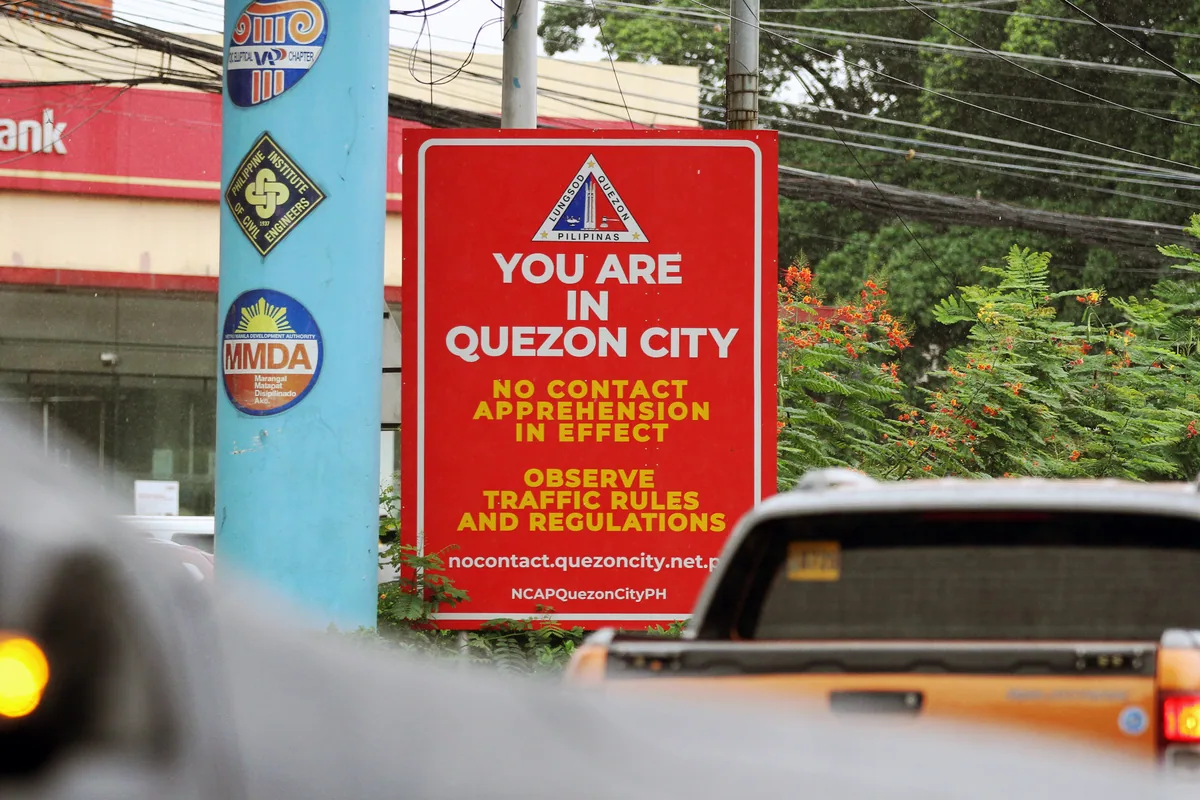
The four years it was off
The policy is a decade old and has been suspended for a third of that. The timeline explains two things a driver keeps running into: why some people have never heard of it, and why the legal footing is still argued about.
2016
The resolution
MMDA Resolution No. 16-01 sets out the policy. It is a resolution, not a statute — which is the whole of the legal argument that follows.
30 Aug 2022
The Supreme Court stops it
Four transport groups — KAPIT, Pasang Masda, Altodap and ACTO — challenge the policy, and the Court issues a temporary restraining order covering both the MMDA and the cities.
20 May 2025
The TRO is partly lifted
The Court's En Banc grants the MMDA's urgent motion, but only for the MMDA and only on major thoroughfares. City ordinances stay restrained.
26 May 2025
The cameras come back on
Enforcement resumes at 12:01 AM, with a thousand more cameras announced. By noon, 479 violations are on the board.
16 Jun 2025
May Huli Ka opens
The portal goes live so a driver can look up a plate without queueing. It goes on to record more than eleven million violations and 2.7 million users.
Jul 2026
The petitions are dismissed
The Court lifts the TRO and dismisses the remaining petitions, clearing the way for the cities. Reported on 10 July 2026; at least one tracker dates the dismissal to 3 June.
8 Jul 2026
It moves into eGovPH
The DICT and the MMDA put NCAP checking and payment inside the national services app, so a driver can register a vehicle once and see every notice against it.
Aug 2026
A third way to search
The portal adds a full-vehicle search keyed on the MV file number alone, for plates that have been replaced or transferred.
5 Oct 2026
The cities return
Manila, Quezon City, San Juan, Parañaque and Muntinlupa resume under the Metro Manila Traffic Code of 2023. Valenzuela postpones its return over road repairs.
The legal argument has not gone away, and it is worth knowing in one sentence: NCAP rests on an MMDA resolution, not on a statute. Petitioners argued that neither the MMDA’s charter in RA 7924 nor the traffic code in RA 4136 creates it. The Court dismissed the petitions in 2026 without answering that question on the merits — which is why the policy is enforceable and still contestable.
MMDA May Huli Ka questions
What is MMDA May Huli Ka?
It is the Metropolitan Manila Development Authority's own portal for its No Contact Apprehension Policy — "may huli ka" means "you got caught". You enter a plate number and a number from your Certificate of Registration, and it tells you whether a camera has recorded a violation against the vehicle, what the amount is, and whether it has been paid. It went live on 16 June 2025 at mayhulika.mmda.gov.ph, and since July 2026 the same check is inside the eGovPH app. By the time the app launched the portal had recorded more than eleven million violations for 2.7 million users.
How do I check if I have an MMDA violation?
Three ways. On mayhulika.mmda.gov.ph you can search by plate plus MV file number, by plate plus ticket number, or — since August 2026 — by MV file number alone. In the eGovPH app you register the vehicle once, either by scanning the Certificate of Registration or by entering the plate or conduction sticker, the 15-digit MV file number, and the make and model, and the app then shows any violation against it with the amount due and the payment status. One account can hold several vehicles. You can also wait for the alert: an SMS from the sender ID MMDA_NCAP and an email from no-reply@mmda.gov.ph, both sent to whatever contact details the LTO holds for you.
Where do I find my MV file number?
On your Certificate of Registration — fifteen digits, near the top. It is not the plate number, the engine number, the chassis number, the conduction sticker or your driver's licence number. This is the field people get wrong, and a single mistyped digit produces the same 'no record found' screen as a clean plate. If you cannot find the certificate, the eGovPH app will scan it for you rather than making you type it.
How long do I have to contest an MMDA NCAP violation?
Ten working days from the day the Notice of Violation reaches you — not from the day of the violation. Weekends and declared holidays do not count, so the deadline usually lands about two weeks after delivery. The contest is filed with the MMDA Traffic Adjudication Division, in person at the 11th floor of the MMDA New Building on Julia Vargas Avenue in Pasig from 7:00 AM to 4:00 PM on weekdays, or online through the QR code printed on the notice. Save the envelope: it is the only proof of the date the clock started.
How much is an MMDA NCAP fine?
Between ₱500 and ₱10,000 across the nine offences in the published schedule. Disregarding traffic signs is ₱1,000 and the most-recorded offence; number coding is ₱500; speeding ₱1,000; beating the red light ₱2,000; illegal lane changing ₱2,000; stopping on a yellow box ₱1,000; no seatbelt ₱1,000; illegal parking ₱1,000–₱2,000; and reckless driving ₱2,000–₱10,000, where the range is an adjudicator's judgement rather than a lookup. The amount printed on your own notice is the authoritative one.
Can I contest an NCAP violation in the eGovPH app?
No — and this is the single most common dead end. The app checks a plate and pays a fine; it does not hear a contest. The contest goes through the MMDA's own Traffic Adjudication Division, either online through the QR code on the Notice of Violation or in person at the MMDA head office in Pasig. A driver who looks for a contest button inside the app will not find one and may conclude there is no route at all.
What happens if I do not pay an NCAP fine?
The plate number goes onto the LTO's alarm list, and an alarmed plate blocks LTO transactions — most importantly the annual registration renewal, but also a transfer of ownership. The alarm clears only once the fine is settled, and payment takes 24–48 hours to reflect in the LTO's records. If it is still showing after 72 hours, call the MMDA hotline 136 with the reference number rather than paying again.
Which roads are covered by NCAP?
15 named roads, listed by the MMDA as C-roads and R-roads: C1 Recto, C2 Mendoza and President Quirino Avenue, C3 Araneta Avenue, C4 EDSA, C5 C.P. Garcia, Katipunan and Tandang Sora, then R1 Roxas Boulevard, R2 Taft Avenue, R3 the South Superhighway, R4 Shaw Boulevard, R5 Ortigas Avenue, R6 Magsaysay and Aurora Boulevard, R7 Quezon and Commonwealth Avenue, R8 A. Bonifacio, R9 Rizal Avenue, and R10 Del Pan, Marcos Highway and McArthur Highway. Cameras also sit on West Avenue, E. Rodriguez Avenue, Buendia Avenue and the Mabuhay Lanes. No expressway is covered — NLEX, SLEX, Skyway, SCTEX, TPLEX, CALAX, CAVITEX, NAIAX, the NLEX Connector, C-5 South Link, CCLEX, STAR Tollway and MCX are all privately operated.
Is a text message about an NCAP fine a scam?
Often, yes. The MMDA has asked the National Bureau of Investigation to look into a scam built on NCAP texts, and was still warning motorists about new ones in October 2026. An official alert comes from the sender ID MMDA_NCAP, names the plate, gives you ten working days, and contains no link, no reply route and no registered owner's name. A message from an ordinary mobile number that greets you by full name, threatens cancellation within 24 hours, or offers a payment link is a scam. Do not tap it: type mayhulika.mmda.gov.ph yourself, or call the MMDA hotline 136.
Can I be fined twice for the same NCAP violation, by the MMDA and by the city?
The MMDA has said publicly that there are no double penalties. The concern is real enough to have been asked about: the MMDA runs cameras on the C-roads and R-roads whichever city they pass through, and 5 cities — Manila, Quezon City, San Juan, Parañaque and Muntinlupa — resumed their own policies on 5 October 2026 under the Metro Manila Traffic Code of 2023. A city ticket and an MMDA ticket are different documents in different systems with different appeal bodies, so the reference number on the notice is what distinguishes them. Valenzuela postponed its return over road repairs.
What is the NCAP fine for number coding?
₱500 under the MMDA's schedule. The ₱1,000, ₱2,000 and ₱5,000 escalating fines that circulate with this question are Makati City's separate ordinance, enforced by Makati's own traffic enforcers rather than by an MMDA camera. A page that quotes the Makati ladder for an EDSA or Commonwealth Avenue ticket has confused two different governments.
Is NCAP still in effect in 2026?
Yes, and more of it than in 2025. The MMDA has enforced it on major Metro Manila thoroughfares since 26 May 2025, when the Supreme Court partially lifted the temporary restraining order it had imposed on 30 August 2022. The Court then lifted the order entirely and dismissed the remaining petitions in July 2026, and five cities resumed their own policies on 5 October 2026. The policy still rests on MMDA Resolution No. 16-01 rather than on a statute, which is why it has been enforceable and contestable at the same time.
Does an NCAP camera catch everything?
No — it catches what happens outside the car. A fixed camera can evidence a sign ignored, a red light beaten, a box entered, a lane crossed or a speed recorded, because the car and the rule are in the same frame. It cannot evidence a phone in a hand, an unlicensed driver or an expired document, because the windscreen and the cabin are in the way. That is why the same nine offences keep appearing in the enforcement data and almost nothing else does. And even for the nine, roughly half of what the cameras flagged in the first nine days did not survive review: 8,586 violations recorded, 4,100 confirmed, an invalidation rate of 52%.
Advertisement
Sources, and what this page could not confirm
A guide, not an MMDA computation and not a legal opinion. The road list, the process and the notification channels are the agency’s own, as briefed to reporters. The fine schedule is the one the write-ups reproduce, not a circular we read — so the amount on your notice governs. Where a city runs its own policy, the city’s rules govern. Everything here was read on November 1, 2026.
Three claims circulate widely that this page could not verify. They are listed rather than dropped, because you may have already met them elsewhere:
NCAP fines carry no interest and no late-payment penalty.
Stated by a widely-read guide as the MMDA's position. We could not find it in an MMDA issuance, and it is not in RA 4136. Treat it as a report and ask at the counter.
The Supreme Court dismissed the petitions on 3 June 2026.
A tracker gives that date. The Inquirer reported the dismissal on 10 July 2026 and Rappler describes the October resumption as coming nearly three months after it. The page prints July, and prints the disagreement.
A hearing is scheduled within 15 days and decided within 15 days.
A tracker states both. Neither figure appears in the MMDA material we could read, so the page describes the process without promising a timetable.
What the page rests on, primary sources first:
- MMDA — the May Huli Ka portal itself (plate + MV file number, or plate + ticket number)
- Rappler — the road list and the six-step process as the MMDA briefed them, 25 May 2025
- Rappler — the five cities that resumed on 5 October 2026, and Valenzuela's postponement
- Rappler — the fine list, and the day-one enforcement data
- SPOT.ph — NCAP inside the eGovPH app, including what it deliberately does not do
- GMA News — the MMDA's own before-and-after on EDSA and Commonwealth accidents
- Philippine Online Help — the payment channels, the contest route and the scam warnings
- Republic Act No. 7924 — the MMDA's charter, which does not name the policy
- Republic Act No. 4136 — the Land Transportation and Traffic Code
Photographs are from Wikimedia Commons under the licences credited in each caption — two Creative Commons, two public domain. No screenshot of the portal is used: the interface images circulating online are illustrations rather than captures, and printing one as though it were the real screen would be the same mistake as printing a fine we could not verify.
The ticket and the plate are the same problem
An unpaid NCAP fine puts your plate on the LTO alarm list, and an alarmed plate cannot be registered. The late-registration guide prices what happens if you find that out at the renewal window.