From 15 November, one breath test can cost you the licence
The LTO stops suspending and starts revoking. Here is the checkpoint procedure in order, the 0.05% limit that applies to some vehicles and not others, and the ₱20,000-to-₱500,000 fine scale none of the three reports printed.
The short answer
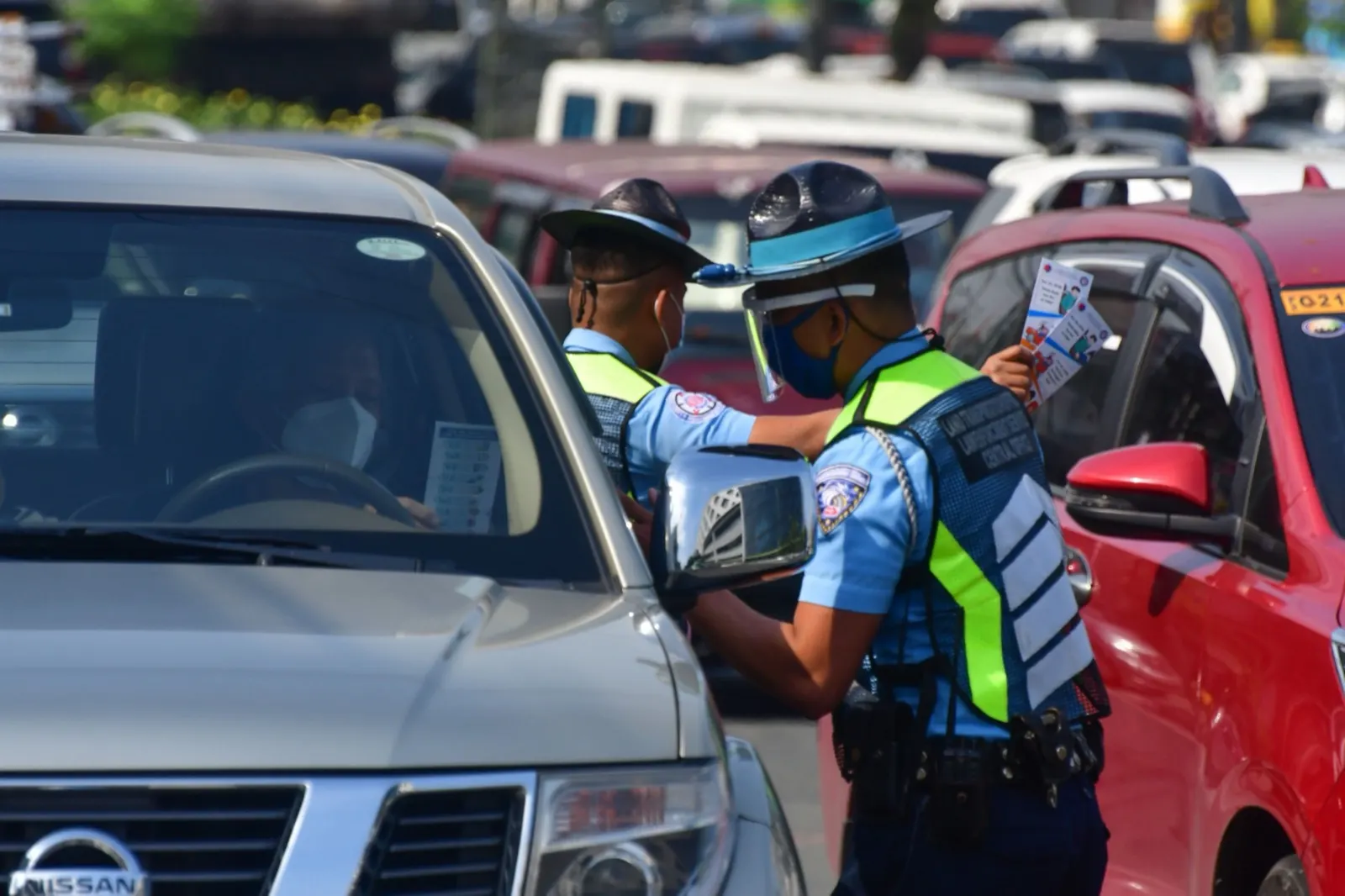
From 15 November 2026, a driver who tests above the legal alcohol limit loses the licence instead of lending it back. The old rule let the LTO choose between suspension and revocation. The new one offers only revocation, which is why this is a bigger change than the effective date suggests: a suspension returns the card at the end of a period, a revocation takes it and starts you over as an applicant.
The three reports that broke the story — ABS-CBN, GMA and PhilSTAR Life — agree on the date and on the headline. They do not agree on everything underneath it, and none of them printed the fine scale, which is the half of the penalty that arrives with a court date attached.
Before 15 November
Suspension or revocation, at the agency’s discretion. The licence generally came back.
From 15 November
Revocation is the sole penalty. The card goes, and a perpetual revocation bars any future licence.
The one thing to remember
Refusing the test is worse than failing it — and the difference is written into the law, not into LTO policy.
Everything below is sourced to the statute first and the reports second. Where the three accounts differ, the comparison table says which outlet carried which fact rather than picking a winner.
Advertisement
What actually happens, in order
Seven stages, and the order is the legal argument. Walk it one step at a time — the refusal stage is a branch, not a stage every driver passes through.
The LTO’s memorandum tells deputized officers to follow the RA 10586 procedure strictly. That procedure is a sequence with dependencies: probable cause unlocks the field tests, failing them unlocks the instrument, a positive reading unlocks the administrative case. Skip a link and the chain does not hold.
There has to be a reason before there is a test
- The officer must
- An officer who has probable cause — observable signs, not a hunch — may conduct field sobriety tests. The statute lists the signs it means: overspeeding, weaving, lane straddling, sudden stops, swerving, poor coordination, or the evident smell of alcohol on the driver's breath.
- What you can do
- Pull over, keep your hands visible, hand over the licence and the OR/CR. You are allowed to ask which unit and which officer is conducting the test, and to note the time.
The thing people get wrong
The smell of alcohol on your breath is itself one of the listed signs. So is a single sudden stop. There is no threshold of bad driving to cross first.
Rule: RA 10586, section 6
The three tests, and why the eye one comes first
Section 3(g) of RA 10586 names them: horizontal gaze nystagmus, walk-and-turn, one-leg stand.
They are not three attempts at the same question. Each one attacks a different faculty, and the first is the one a driver cannot rehearse — which is exactly why an officer runs it before asking you to walk a line.
Horizontal gaze nystagmusHGN
The officer moves an object across your field of view and watches the eye track it. Involuntary jerking at the edge of the gaze is the sign.
It is the least voluntary of the three: you cannot perform your way out of an eye reflex, which is why it is run first.
Walk-and-turnWAT
Nine heel-to-toe steps along a straight line, a turn on the spot, then nine steps back, counting aloud.
It splits attention on purpose — walking and counting at once. Sober drivers find it boring; that is the point.
One-leg standOLS
Lift one foot about six inches, keep it there, and count — typically to thirty — while the officer watches for sway and for the foot touching down.
Balance is the first thing alcohol takes and the last thing a driver notices going.
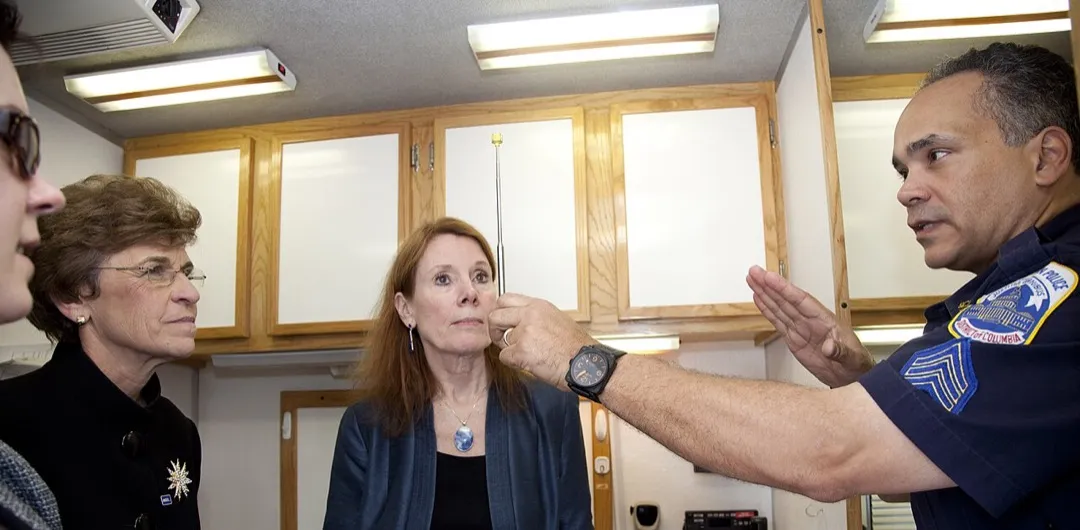
The failure is what unlocks the instrument, not the suspicion. That ordering is why the LTO’s October guidance repeats that a breath analyzer cannot be the initial screening test or the sole basis for preliminary testing — a reading with no field-test record behind it is a reading with a procedural gap in front of it.
One exception, and it is not discretionary: a driver involved in a crash that caused injury or death is chemically tested under section 7 whether or not a single field test was conducted.
Two limits, and only one of them is a number you can argue with
0.05% for a private vehicle up to 4,500 kg. Zero for everything that carries passengers for hire, and for motorcycles.
This is the part the headlines compressed. ABS-CBN and PhilSTAR Life both print the 0.05% figure; only PhilSTAR names all four zero-tolerance classes. GMA does not mention a threshold at all, which is how a reader can finish the story believing one number covers every vehicle on the road.
The legal scale
0.05%
Over the limitOver — the revocation track
At or above the private-car limit. Show-cause order from the IID, then a hearing, then revocation — with the section 12 fine running alongside it.
This is the scale the law uses, not a reading of you. Nothing on this page can tell you whether you are fit to drive, and we do not convert drinks into a number — body mass, food, time and pour size move it too far for that to be honest.
| Vehicle | Limit | What it means |
|---|---|---|
| Private car, van, SUVGross vehicle weight not exceeding 4,500 kg | 0.05% | At or above this reading, the revocation track opens. |
| Truck, bus, motorcycle, PUVIncluding taxis, TNVS and school or company transport | 0.00% | Zero tolerance: any alcohol reading at all is over the limit. |
Zero tolerance is not a rounding difference. A reading that would be unremarkable in a sedan is a positive result on a motorcycle, in a taxi, in a delivery van. If you drive for a living, the 0.05% figure you have read about does not apply to you at all.
Advertisement
What it costs — the half none of the three reports printed
Section 12 of RA 10586, quoted from the statute. The licence penalty and the fine are two separate consequences.
The news coverage is about the licence, so the licence is what it describes. But a drunk-driving case is also a criminal case, and section 12 attaches imprisonment and a fine to it — scaled to whether anybody was hurt. Read the licence column and the criminal column together, because the agency acts on one while the court acts on the other.
| Outcome | Criminal exposure | The licence |
|---|---|---|
| No one hurt | 3 months imprisonment and a fine of ₱20,000 to ₱80,000Section 12(a) and 12(d). The licence column is per conviction, so a second conviction revokes a non-professional licence for good. | Non-professional: 12 months' suspension on a first conviction. Professional: perpetual revocation on a first conviction. |
| Someone injured | The penalty for physical injuries under Article 263 of the Revised Penal Code — or the penalty above, whichever is higher — and a fine of ₱100,000 to ₱200,000 | Confiscation, on the same section 12(d) scale |
| Someone killed | The penalty for homicide under Article 249 of the Revised Penal Code and a fine of ₱300,000 to ₱500,000 | Perpetual revocation, per the LTO's reading of the 2026 order |
| Refused the test | In addition to any other penaltySection 8. No conviction required — the refusal is the offence. | Confiscation and automatic revocation |
| You own the vehicle | The owner or operator is directly and principally liable with the driver for the fine and for civil damagesSection 13, unless the owner proves extraordinary diligence in selecting and supervising the driver. It is written for fleet and PUV operators, and it is the reason a company driver's bad night reaches the company. | — |
The number to plan around
₱20,000 to ₱80,000 and three months — before the licence, before the impound, before the civil claim.
Three things the headlines left out
Each one is in the statute, and each one changes what a driver should do.
1. The 0.05% figure is not in the law. Section 3(e) defines driving under the influence by reference to a level of intoxication “as established jointly by the Department of Health, the National Police Commission and the Department of Transportation and Communications”. The number lives in the implementing rules. That matters because a number in an IRR can be revised by the same three agencies, while the offence in the statute cannot.
2. The criminal case and the licence case are separate tracks. The LTO acts on the card; the court acts on the person. The agency’s stated jurisdiction is the licence — which is precisely the gap the November order was written to close, since going after offenders through the courts was slow. One does not pause the other.
3. The owner can be liable with the driver. Section 13 makes the owner or operator directly and principally liable for the fine and for civil damages, unless they can convincingly prove extraordinary diligence in selecting and supervising the driver. It is written with PUV and fleet operators in mind, and it is the reason a company driver’s bad night does not stay a company driver’s problem.
Six things people believe about a checkpoint
Each card opens onto the provision that corrects it.
MythThe breathalyzer is the first thing they do.
Actually
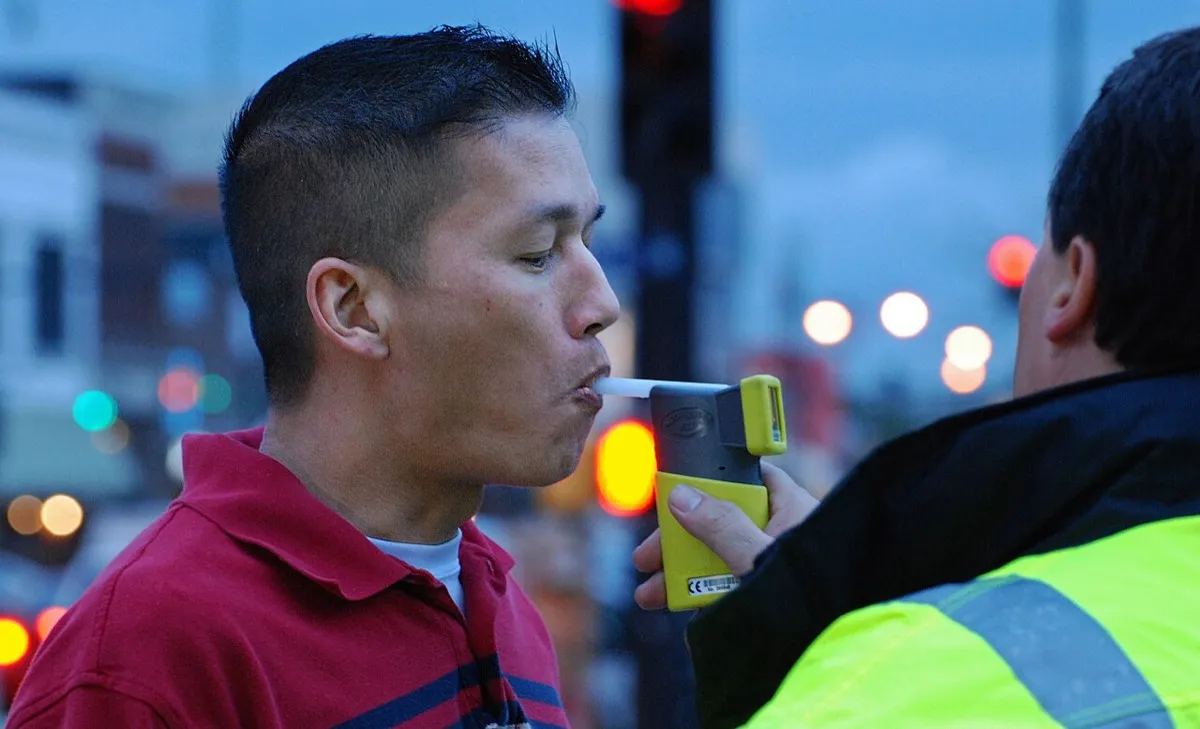
Three field tests come first, and the LTO repeated in October 2026 that the instrument cannot be the initial screening test. A reading taken before the battery is a procedural defect, and the record of the order is what an appeal is built on.
RA 10586 §6; LTO Memorandum MVL-2026-242
MythCoffee, a cold shower, or an hour of sitting still clears it.
Actually
The law has no sobering defence. Section 6 measures blood alcohol concentration; there is no provision anywhere in RA 10586 for a method that resets the number, because none exists. Feeling alert is not a reading.
RA 10586 §6
MythTwo bottles of beer is under the limit, so it is fine to drive.
Actually
We will not turn drinks into a number, and neither should anyone else: body mass, food, time and pour size move it too far for a table to be honest. The only planning assumption that survives a checkpoint is zero — and for a motorcycle, a truck or a PUV it is the legal assumption too.
RA 10586 §3(e) and its implementing rules
MythThe licence is revoked on the spot.
Actually
For a positive reading, no: a show-cause order from the Intelligence and Investigation Division comes first, then a hearing, and the LTO says the result can be appealed. The exception is refusal, which is automatic under section 8 — the one step with no procedural room.
RA 10586 §8; LTO statements of 28 October 2026
MythSuspension and revocation are the same paperwork.
Actually
A suspension returns the licence at the end of a period. A revocation takes it, and a perpetual revocation disqualifies the holder from being granted any licence afterwards — the difference between a bad year and a different career.
RA 10586 §12(d)
MythIf it is in court, the LTO has to wait.
Actually
The two tracks run in parallel. The LTO's stated jurisdiction is the licence, which is why the November order exists at all: the agency can act on the card without waiting for a conviction.
RA 4136 §27(a); LTO statements of 28 October 2026
Tap a card — every correction cites the provision behind it
How the three newsrooms reported it
One briefing, three accounts. This is what each outlet actually carried, so a reader can tell which fact came from where.
We are not going to pretend the three stories are interchangeable, and we are not going to pick a favourite. Two facts exist in only one report each — the memorandum number in PhilSTAR Life, the perpetual-revocation quote and the Cebu caseload in GMA — and if you are preparing for a hearing, that difference is the difference between a sourced fact and a rumour.
| Fact | ABS-CBN | GMA | PhilSTAR |
|---|---|---|---|
| Effective date | 15 November 2026 | 15 November 2026 | 15 November 2026 |
| Revocation as the sole penalty | Yes — previously suspension or revocation | Yes | Yes |
| The 0.05% figure | Stated, with the 4,500 kg threshold | Not stated | Stated, with the 4,500 kg threshold |
| Zero tolerance for PUVs, trucks, buses, motorcycles | PUV drivers: no alcohol at all | Not stated | All four classes named |
| Show-cause order, then hearing | Show-cause from the IID | IID handles it; hearings held | Records go to the IID for review |
| Appeal possible | Not stated | Yes | Not stated |
| Perpetual revocation if someone is hit or killed | Not stated | Quoted directly from the LTO chief | Not stated |
| The memorandum number | Not stated | Not stated | MVL-2026-242 |
| Where the most cases are logged | Not stated | Cebu | Not stated |
Advertisement
Would you get through the checkpoint quiz?
Six questions. Every wrong answer on this list is a belief the three reports left ambiguous.
At what reading does a private car cross the limit?
Drunk driving questions
When does the LTO start revoking licences for drunk driving?
15 November 2026. The LTO said in an October 29 Facebook post that it had issued Memorandum No. MVL-2026-242, directing deputized enforcement officers to follow the RA 10586 testing procedure strictly; the revocation-as-penalty change takes effect on the 15th. The agency timed it ahead of the Christmas traffic peak.
What is the blood alcohol limit for drivers in the Philippines?
0.05% for a private vehicle with a gross weight not exceeding 4,500 kg. Trucks, buses, motorcycles and public utility vehicles are on zero tolerance — any alcohol reading at all is over the limit. The 0.05% figure comes from the implementing rules of RA 10586, not from the statute's own text, which defines the offence by reference to a level of intoxication set by the DOH, NAPOLCOM and the DOTC.
Is my licence revoked on the spot if I fail the test?
Not for a positive reading. The Intelligence and Investigation Division issues a show-cause order and the driver is given the chance to explain; the case then goes through hearings before a resolution, and the LTO says the outcome can still be appealed. Refusing the test is the exception — that revocation is automatic under section 8.
What happens if I refuse the breathalyzer?
Confiscation and automatic revocation of the licence under section 8 of RA 10586, in addition to any other penalty. There is no show-cause stage and no hearing described in the statute for a refusal, which makes it the worst outcome available at a checkpoint — worse than a high reading.
How much is the fine for drunk driving?
Under section 12 of RA 10586: ₱20,000 to ₱80,000 plus three months' imprisonment where nobody was hurt; ₱100,000 to ₱200,000 where someone was injured, with the Revised Penal Code penalty for physical injuries or the lower-tier penalty, whichever is higher; and ₱300,000 to ₱500,000 plus the homicide penalty where someone was killed. The licence penalties run alongside the fine, not instead of it.
Can an officer use the breathalyzer without the field sobriety tests?
No. Section 6 makes the field tests the trigger for the instrument, and the LTO's October 2026 guidance says the analyzer cannot be the initial screening test or the sole basis for preliminary testing. The one exception is a crash resulting in injury or death: section 7 requires chemical testing whether or not any field test was conducted.
What happens to my licence if I am convicted?
A non-professional licence is confiscated and suspended for 12 months on a first conviction, and perpetually revoked on a second. A professional licence is perpetually revoked on the first conviction. A perpetual revocation disqualifies the holder from being granted any kind of licence afterwards.
Is the car owner liable too?
The owner or operator is directly and principally liable with the driver for the fine and for civil damages, unless they can convincingly prove extraordinary diligence in selecting and supervising the driver. Section 13 says this applies principally to PUV and commercial operators — which is why a company driver's case reaches the company.
Advertisement
Sources, and what this piece is not
This is reporting and explanation, not legal advice, and not an LTO publication. Penalties are applied by the agency and the court handling a specific case, and the facts here were checked on October 31, 2026. Memorandum MVL-2026-242 is quoted as reported — we could not obtain the text itself.
Statute first, then the order as reported, then the three accounts of it:
- Republic Act No. 10586 — the Anti-Drunk and Drugged Driving Act of 2013 (sections 3, 6, 7, 8, 12, 13)
- Republic Act No. 4136 — the Land Transportation and Traffic Code, section 27(a), the LTO's power to revoke
- ABS-CBN News, 28 October 2026 — “Drunk driving? Here's what the new protocol says”
- GMA News, 28 October 2026 — “LTO to start revoking drunk drivers' licenses by November 15”
- PhilSTAR Life, 30 October 2026 — “LTO to begin revoking licenses of drunk drivers on Nov. 15”, the only report of Memorandum No. MVL-2026-242
- Land Transportation Office — official site, for the memorandum and the current licensing rules
A correction to any figure on this page goes to the same address the rest of the site uses — the methodology page states how a correction is handled.
The ticket is the cheaper problem
A drunk-driving case brings its own fine — but the ordinary traffic violations still arrive with their own schedule, and the licence consequences are the part people only read afterwards.